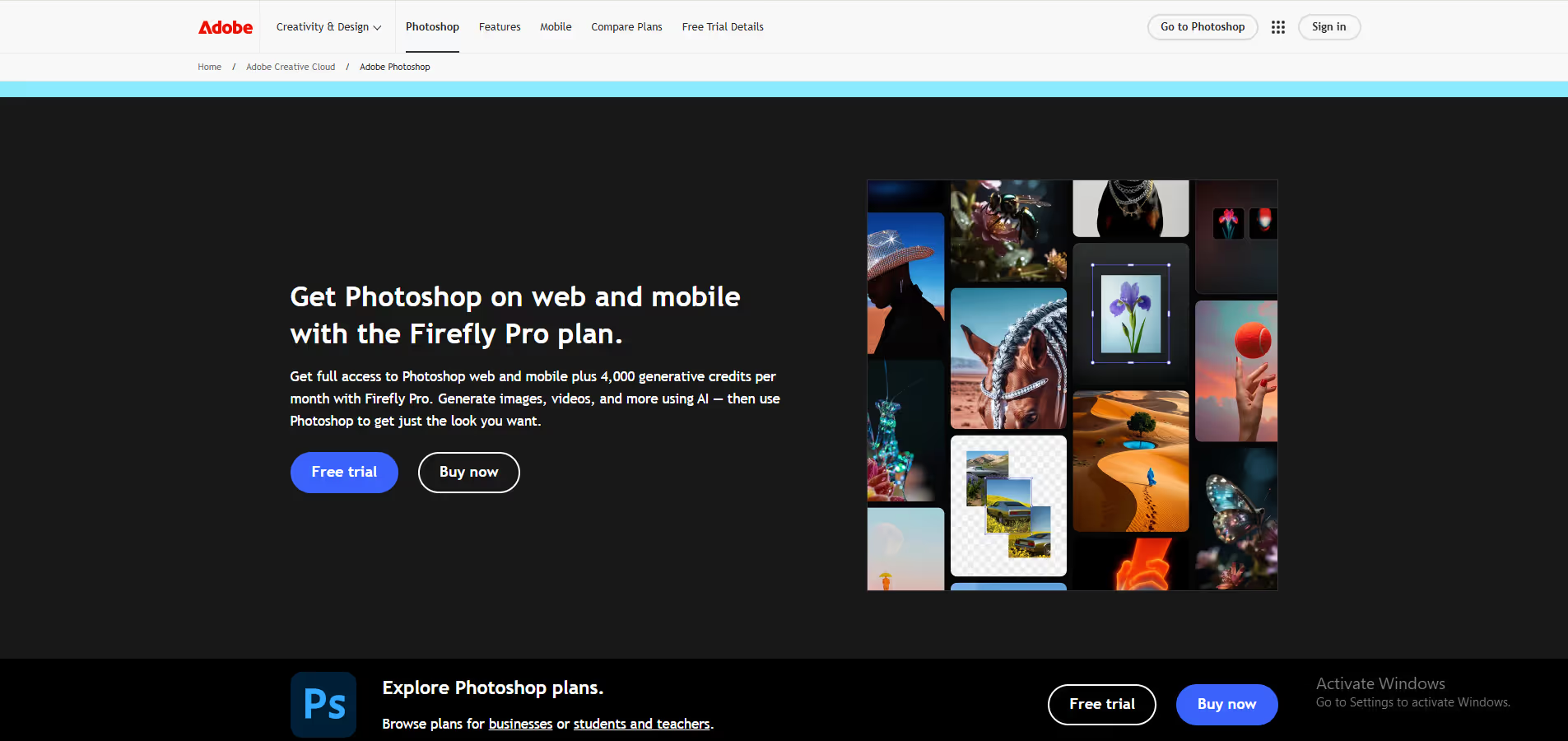
Adobe Photoshop
Key Applications
- Photo Editing & Retouching: The industry standard for manipulating, correcting, and enhancing photographs, from color grading and compositing to advanced skin retouching.
- Digital Painting & Illustration: Provides a full suite of brushes and painting tools for creating digital art, matte paintings, and concept art from a blank canvas.
- UI/UX & Web Design: Used for designing and mocking up website layouts, mobile app interfaces, and social media graphics, often before final assets are built in code.
- Specific Workflow: A retoucher corrects lighting and color in a product photo, removes background imperfections, and composites the image into a new scene for an advertising campaign.
Who It’s For
This software is essential for photographers, graphic designers, digital artists, and marketing professionals. It solves the problem of manipulating pixel-based images with unparalleled control and creativity. The primary buyer persona is a Professional Photographer or Digital Artist whose work requires detailed, layer-based image composition and non-destructive editing.
Pros & Cons
| Pros |
Cons |
| ✔ Industry-standard photo editing |
✖ Steep learning curve |
| ✔ Huge library of tools & brushes |
✖ Subscription-only (costly) |
| ✔ Excellent for advanced design |
✖ Overkill for simple projects |
| Pros |
Cons |
| ✔ Very beginner-friendly |
✖ Limited features compared to Others |
| ✔ Clean interface |
✖ Less feature depth than others |
| ✔ Helpful community and resources |
✖ Can feel slower at scale |
How It Compares
- Versus Affinity Photo: Photoshop wins on industry ubiquity, a vast plugin/action ecosystem, and deep integration with Adobe's apps (Lightroom, Illustrator), whereas Affinity Photo wins on one-time purchase cost and performance.
- Versus GIMP: It is the professional commercial standard with a more refined interface, advanced features (e.g., Smart Objects, Camera Raw), and professional support, while GIMP is a powerful free & open-source alternative.
- Versus Canva: Its competitive advantage is providing limitless, granular creative control for original asset creation and complex editing, while Canva is a template-based platform for quick, non-technical design.
Bullet Point Features
- Non-destructive editing with Layers and Smart Objects
- Advanced selection and masking tools (Select Subject, Refine Edge)
- Integrated Adobe Camera Raw for photo processing
- Extensive brush engine for digital painting
- 3D design and texturing capabilities
Frequently Asked Questions
Find quick answers about this tool’s features, usage ,Compares, and support to get started with confidence.
What is Adobe Photoshop mainly used for?

Adobe Photoshop is a professional image editing and digital art software used for photo retouching, graphic design, compositing, and digital painting.
Who should use Adobe Photoshop?

Photographers, graphic designers, digital artists, and marketers can benefit. It’s ideal for anyone who wants full creative control over images and visual content.
How does Photoshop simplify complex image editing tasks?

Users can retouch photos, manipulate layers, apply filters, and combine elements seamlessly, making it possible to create professional-quality visuals efficiently.
Can Photoshop be used for digital illustration and design?

Absolutely. Photoshop supports drawing tablets, brushes, vector shapes, and advanced layer effects, making it suitable for illustrations, concept art, and UI design assets.
Why choose Adobe Photoshop over simpler photo editors?

Unlike basic editors, Photoshop offers advanced tools, precise controls, professional-grade effects, and integration with Adobe Creative Cloud, making it a top choice for serious creators and professionals.