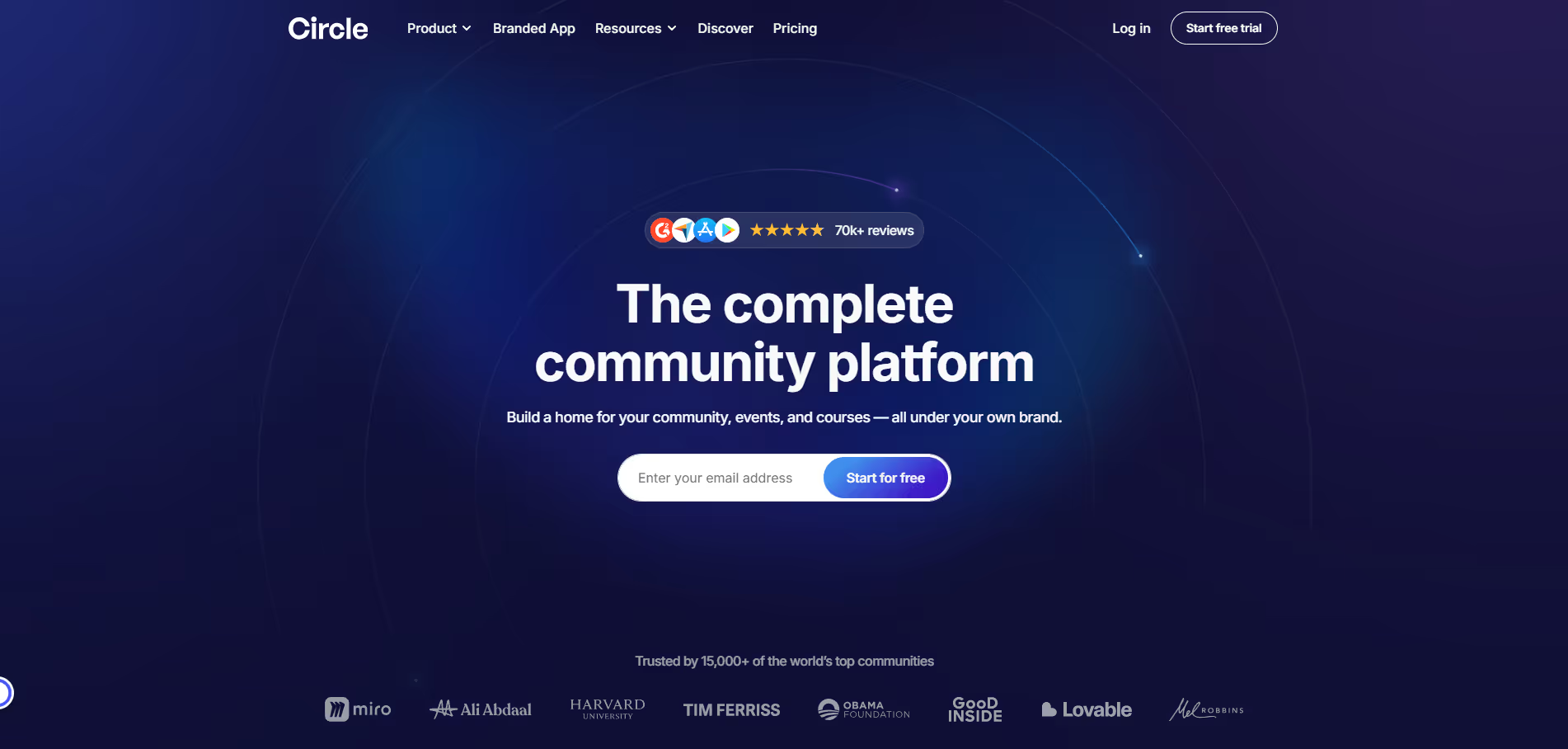
Circle.so
Key Applications
- Membership Sites: Hosting exclusive content, discussions, and resources for paid or private members.
- Online Courses: Delivering structured course content alongside interactive community features for enhanced learning.
- Coaching Programs: Facilitating group coaching sessions, Q&A forums, and peer support within a dedicated, branded environment.
- Brand Communities: Building a loyal customer or fan base around a product, service, or personal brand with direct engagement.
Who It’s For
Creators, coaches, course instructors, entrepreneurs, and businesses seeking a branded, integrated platform to build and manage an active, engaged online community without relying on external social media platforms.
Pros & Cons
| Pros |
Cons |
| ✔️ Deep customization options for branding and community structure. |
✖️ Can be more expensive than basic forum solutions or free social media groups. |
| ✔️ All-in-one platform for discussions, courses, live events, and content. |
✖️ Some advanced monetization features may require additional third-party integrations. |
| ✔️ Strong focus on ownership and control over your audience and data. | ✖️ May have a steeper learning curve for new users compared to simpler chat-based platforms. |
| ✔️ Dedicated native mobile apps enhance member engagement and accessibility. | ✖️ Lacks the organic discovery and viral reach potential of established social media platforms. |
| Pros |
Cons |
| ✔ Very beginner-friendly |
✖ Limited features compared to Others |
| ✔ Clean interface |
✖ Less feature depth than others |
| ✔ Helpful community and resources |
✖ Can feel slower at scale |
How It Compares
- Versus Slack/Discord: Offers a more structured content organization, direct monetization capabilities, and a fully branded experience, contrasting with the more informal, chat-centric nature of Slack or Discord. Versus Facebook Groups: Provides complete ownership and control over member data and content, avoids social media distractions, and allows for deep customization under a proprietary brand, which Facebook Groups do not.
- Versus Mighty Networks: Often presents a more streamlined interface with a strong focus on simplicity and powerful core community features, potentially offering a more intuitive user experience for certain applications.
Bullet Point Features
- Customizable spaces (public, private, secret) with granular permissions Member profiles, direct messaging, and group chat functionalities Live streams and event management tools
- Built-in course creation and content paywalls for monetization
- Robust moderation tools and analytics for community management Extensive integrations (e.g., Zapier, SSO, various marketing and LMS tools)
- Dedicated native mobile apps for iOS and Android Custom domain support for a fully branded experience
Frequently Asked Questions
Find quick answers about this tool’s features, usage ,Compares, and support to get started with confidence.
What is Skool and what does it do?

Skool is an all-in-one platform that combines online courses, community engagement, and membership management. It allows creators and businesses to host private communities while offering educational content and interactive discussions in a single environment.
How does Skool help creators and businesses?

Skool helps users organize courses, manage members, and foster community interaction. Members can participate in discussions, access learning materials, and connect with others, creating a centralized space for learning and networking.
Is Skool beginner-friendly?

Yes, Skool is easy to set up and navigate. Its intuitive interface allows creators to launch courses, manage members, and moderate communities without needing technical skills.
Can Skool integrate with other tools?

Yes, Skool supports integration with payment gateways, email marketing platforms, and analytics tools, enabling smooth workflows and better tracking of engagement and course performance.
Who should use Skool and what are the benefits?

Skool is ideal for educators, coaches, online course creators, and community managers. It helps build active communities, improve learner engagement, streamline course delivery, and foster meaningful connections among members.