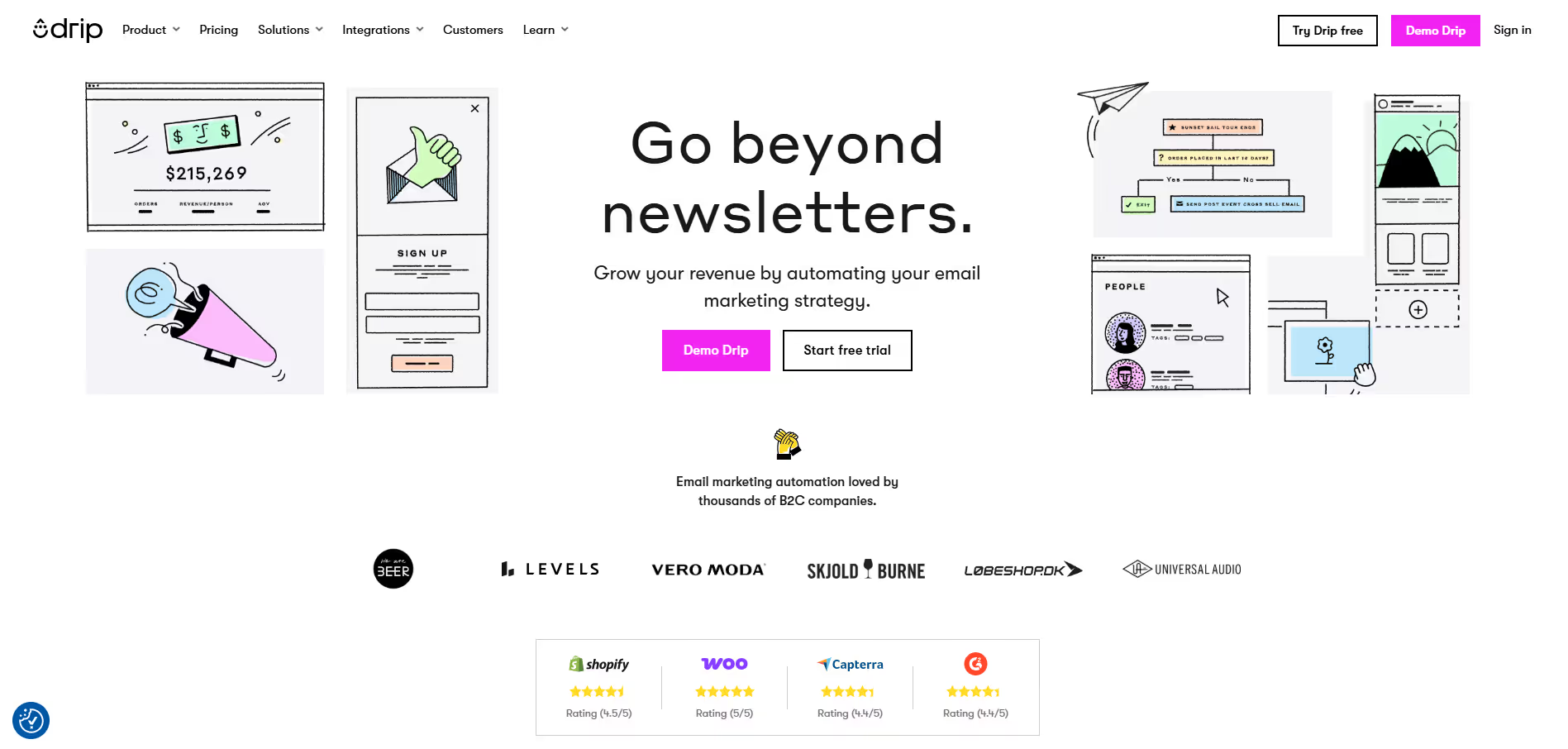
Drip
Key Applications
- E-commerce Automation: Automating customer journeys across email, SMS, and other channels based on purchase behavior and engagement.
- Customer Segmentation: Creating highly specific customer segments using purchase history, website activity, and demographic data for targeted marketing.
- Personalized Communication: Delivering individualized emails and SMS messages that resonate with customers, improving engagement and conversions.
- Lead Nurturing & Retention: Developing automated sequences to convert new leads into first-time buyers and retaining existing customers through loyalty programs and win-back campaigns.
Who It’s For
E-commerce businesses, online retailers, and direct-to-consumer (DTC) brands looking for a powerful marketing automation platform with deep segmentation capabilities and seamless integration with their online stores. It's particularly well-suited for businesses aiming to create highly personalized customer experiences.
Pros & Cons
| Pros |
Cons |
| ✔️ Powerful e-commerce specific automation and segmentation capabilities. |
✖️ Pricing can become substantial as contact lists grow. |
| ✔️ Intuitive visual workflow builder for creating complex customer journeys. |
✖️ Steeper learning curve for beginners compared to simpler email platforms. |
| ✔️ Strong integrations with major e-commerce platforms and comprehensive analytics. |
✖️ Less suitable for businesses outside of the e-commerce sector due to its specialized focus. |
| Pros |
Cons |
| ✔ Very beginner-friendly |
✖ Limited features compared to Others |
| ✔ Clean interface |
✖ Less feature depth than others |
| ✔ Helpful community and resources |
✖ Can feel slower at scale |
How It Compares
- Versus Klaviyo: While both are strong e-commerce platforms, Drip often provides a more intuitive visual workflow builder for complex customer journeys and a slightly stronger focus on the CRM aspect for smaller to mid-sized e-commerce businesses. Klaviyo is often favored by larger stores for its extensive e-commerce integrations and advanced email analytics.
- Versus ActiveCampaign: ActiveCampaign is a general-purpose marketing automation platform suitable for various industries, whereas Drip is purpose-built for e-commerce. Drip offers specialized integrations and features tailored specifically to online retail, potentially simplifying the creation of relevant campaigns for e-commerce businesses.
Bullet Point Features
- Visual Workflow Builder Advanced Customer Segmentation .
- Email & SMS Marketing, E-commerce Specific Automations .
- Lead Scoring & Retargeting Deep E-commerce Platform Integrations (Shopify, WooCommerce, Magento).
Frequently Asked Questions
Find quick answers about this tool’s features, usage ,Compares, and support to get started with confidence.
What is Drip and what is it used for?

Drip is an email marketing and marketing automation platform built primarily for e-commerce businesses. It helps brands create personalized email campaigns and automated customer journeys to increase engagement, conversions, and lifetime value.
How does Drip support marketing automation?

Drip allows users to build advanced automation workflows based on customer behavior, purchases, and engagement. Businesses can trigger emails, segment audiences, and deliver personalized messages at the right time without manual effort.
What features does Drip offer?

Drip includes email campaign creation, visual workflow automation, advanced segmentation, customer profiles, analytics and reporting, and integrations with popular e-commerce platforms and marketing tools. These features help businesses run targeted and data-driven marketing campaigns.
Is Drip suitable for beginners?

Drip is easy to use but powerful, making it suitable for both beginners and advanced marketers. Its clean interface, visual automation builder, and helpful documentation allow new users to get started quickly while still supporting complex use cases.
Who should use Drip and what benefits can they expect?

Drip is ideal for e-commerce brands, online retailers, and digital marketers. Users can expect improved customer engagement, personalized marketing experiences, higher conversion rates, better customer retention, and actionable insights, helping them grow revenue through smarter email marketing.