Mailgun
Developer-focused email API platform for sending, receiving, and tracking emails at scale.
Best-in-class transactional email API for developers; pay-as-you-grow pricing suits startups to enterprises.
Community ratings
Third-party ratings shown verbatim; aggregate weighted by review volume.
Mailgun — developer-first transactional email API and SMTP relay platform.
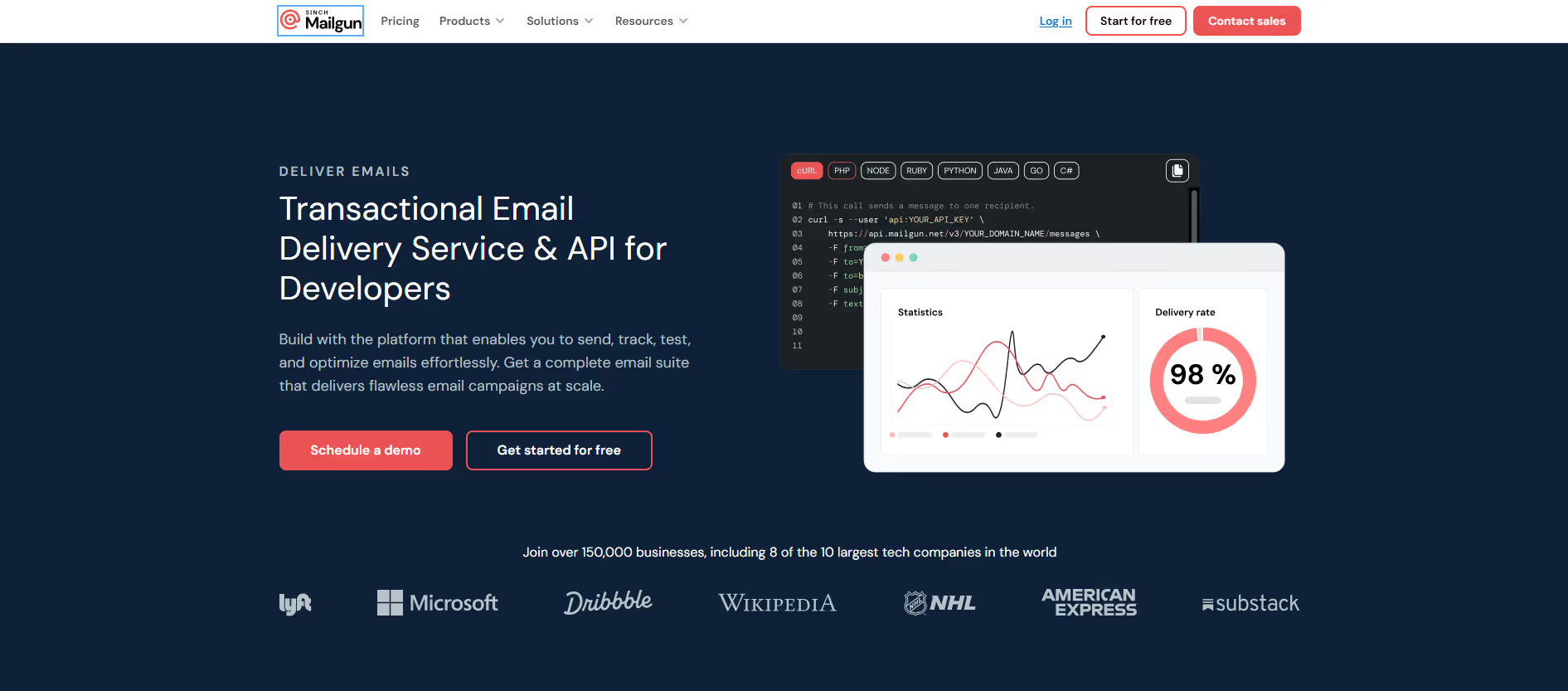
Mailgun is the go-to transactional email API for developers who need reliable programmatic sending, real-time analytics, and inbox validation at scale. Mailgun is a transactional/developer email platform, and its model is freemium with paid plans from $15/mo. The free tier covers only 100 emails/day — useful for testing, not production.
Mailgun offers one of the most mature transactional email APIs available — battle-tested by thousands of SaaS apps, with granular webhook events, detailed send logs, and robust validation tools that genuinely improve deliverability. Foundation and Scale tiers include a one-month free trial, lowering the commitment barrier.
The free tier caps at 100 emails/day — barely enough for development testing. Costs escalate quickly at volume, dedicated IPs are a steep $59/IP/mo add-on, and phone/chat support is locked behind the $90/mo Scale plan.
A look inside
Frequently Asked Questions
Alternatives
SendGrid or Postmark for enterprise-grade deliverability services and richer analytics dashboards.
Brevo (free up to 300 emails/day) for smaller senders who need both transactional and basic marketing email.
Tags
Explore related categories
Conversion Gems independently reviews every tool. We may earn a commission if you sign up through our links — it never affects our verdict or ranking.