Similarweb
Gain in-depth insights into website traffic, audience behavior, and competitor strategies with Similarweb's AI-powered analytics platform.
The gold standard for external competitive intelligence — powerful but priced for teams with real budgets.
Community ratings
Third-party ratings shown verbatim; aggregate weighted by review volume.
Similarweb — digital intelligence platform for competitive web analytics and market research.
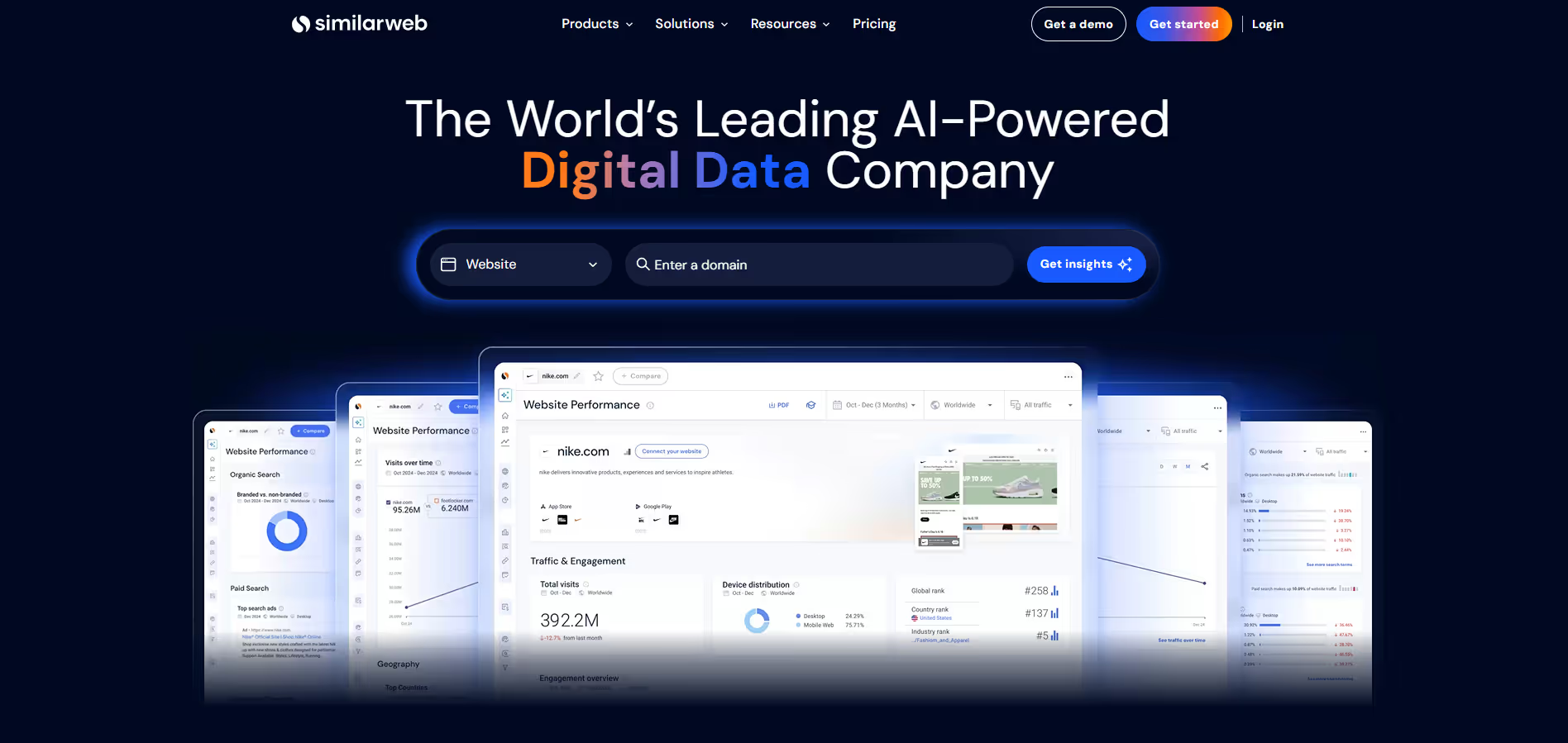
Similarweb is the industry standard for external website intelligence, offering traffic estimates, audience demographics, channel breakdowns, and keyword insights across millions of domains. The DB categorizes it under 'SEO' alone, but that undersells it — competitive intelligence and market research are the primary use cases, with SEO being one of several optional add-on modules. Entry pricing is $199/mo (monthly) or $125/mo billed annually ($1,500/yr), aligning with the DB's figures, though plan names have shifted from 'Starter' to 'Competitive Intelligence.'
No other self-serve tool matches Similarweb's breadth of external traffic data — it covers web, app, sales, retail, and even stock intelligence signals under one roof. The 2025–2026 addition of AEO (AI brand-citation tracking) keeps it ahead of pure-SEO rivals on the emerging AI-search frontier.
Pricing scales steeply: even the entry plan limits you to 1 user and 3 months of history, and meaningful team access starts around $14–16K/yr. Data accuracy for low-traffic sites (<50K monthly visits) can be unreliable, and the learning curve is real.
A look inside
Frequently Asked Questions
Alternatives
Similarweb Enterprise for API access, multi-seat, and full intelligence suite across web, app, retail, and sales data.
SEMrush or Ahrefs for pure SEO/keyword research at lower cost; SpyFu for budget-conscious paid-search competitive analysis.
Tags
Explore related categories
Conversion Gems independently reviews every tool. We may earn a commission if you sign up through our links — it never affects our verdict or ranking.