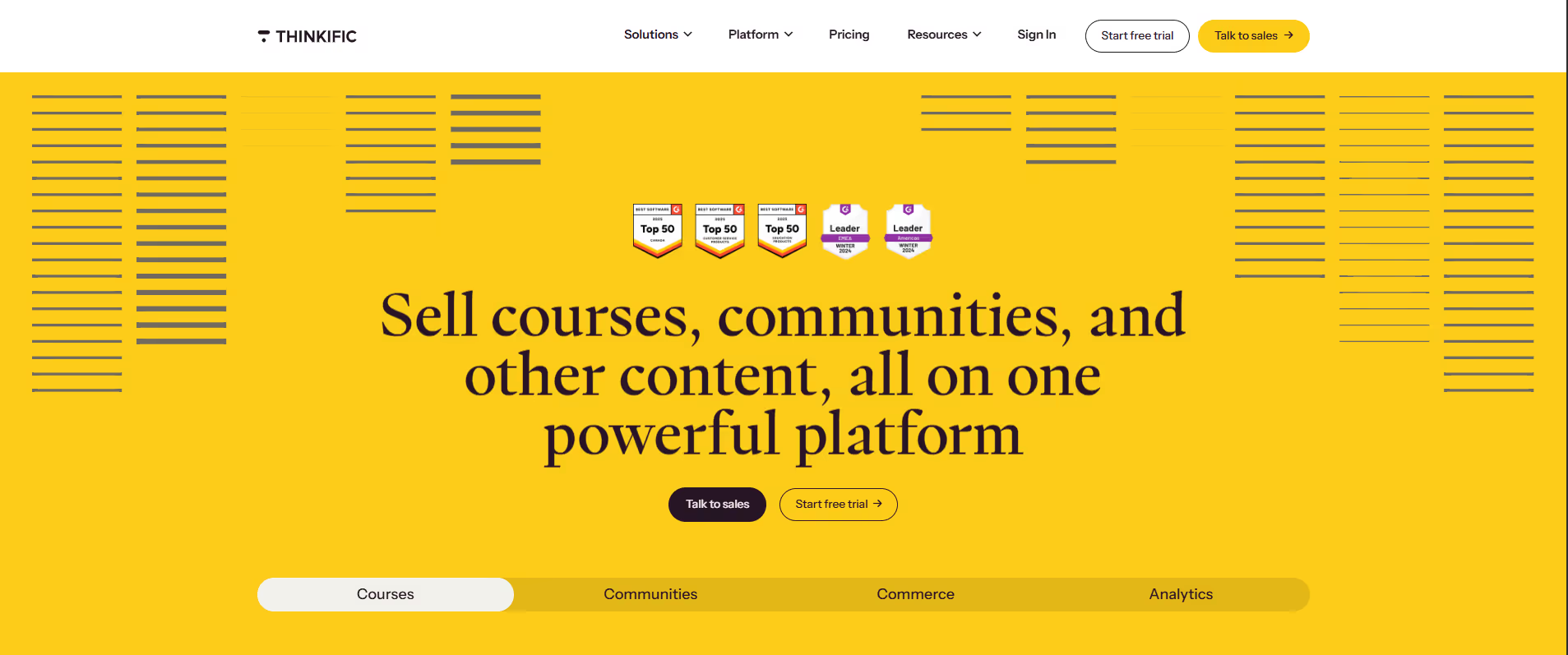
Thinkific
Key Applications
- Online Course Creation: Developing and launching comprehensive digital courses with multimedia content, quizzes, and assessments.
- Membership Site Management: Building recurring revenue streams through exclusive, gated content and community access.
- Digital Product Sales: Selling various digital products, such as e-books, templates, and workshops, alongside traditional courses.
- Employee & Customer Training: Delivering internal training programs for teams or educational content for customer onboarding and success.
Who It’s For
Individual entrepreneurs, small to medium-sized businesses, coaches, consultants, and educators who aim to monetize their knowledge by creating and selling professional online courses and membership content without requiring extensive technical development skills.
Pros & Cons
| Pros |
Cons |
| ✔️ Robust course builder supporting diverse content types. |
✖️ Built-in marketing automation and email features are less comprehensive than all-in-one platforms. |
| ✔️ Extensive customization options for branding and website design. |
✖️ Can have a steeper learning curve for absolute beginners compared to simpler alternatives. |
| ✔️ No transaction fees on paid plans, maximizing creator revenue. |
✖️ Advanced features and support tiers are locked behind higher-priced plans. |
| ✔️ Strong student management, engagement tools, and community features. |
✖️ Some users desire more flexibility in customizing quiz types and assignment submissions. |
| Pros |
Cons |
| ✔ Very beginner-friendly |
✖ Limited features compared to Others |
| ✔ Clean interface |
✖ Less feature depth than others |
| ✔ Helpful community and resources |
✖ Can feel slower at scale |
How It Compares
- Versus Teachable: Thinkific often provides more extensive site customization options and advanced course compliance features, whereas Teachable is frequently praised for its simpler interface and streamlined setup for individual creators.
- Versus Kajabi: Thinkific focuses predominantly on course creation and basic marketing, making it a more cost-effective option for pure education businesses. Kajabi, by contrast, is an all-encompassing platform that includes advanced marketing funnels, email marketing, and CRM, often at a higher price point.
Bullet Point Features
- Course Builder Customizable Website & Landing Page, Themes Integrated.
- Payment Processing & Student Management Quizzes, Surveys, and Certificates of Completion Drip.
- Content and Course Bundling Options, Affiliate Marketing Tools, Built-in Community Features and Discussion Forums.
-
Frequently Asked Questions
Find quick answers about this tool’s features, usage ,Compares, and support to get started with confidence.
What is Thinkific and what does it do?

Thinkific is an online course creation and learning management platform (LMS) that enables individuals and businesses to create, market, and sell online courses. It provides the tools to design courses, host content, and deliver a professional learning experience without technical expertise.
How does Thinkific simplify online course creation and delivery?

Thinkific allows users to build courses with multimedia content, quizzes, and assessments, manage student enrollments, and deliver lessons via a branded platform. It streamlines course administration and ensures a smooth learning experience for students.
What features does Thinkific offer for course creators?

Thinkific offers features such as drag-and-drop course builder, quizzes and assessments, drip content, membership sites, email automation, analytics, and payment processing. These tools help creators design engaging courses and manage learners effectively.
Can Thinkific integrate with other tools and platforms?

Yes — Thinkific integrates with tools like Zapier, Mailchimp, ConvertKit, Salesforce, Shopify, and Stripe, allowing seamless workflow automation, marketing campaigns, and payment processing.
Who should use Thinkific and what benefits can they expect?

Thinkific is ideal for educators, coaches, entrepreneurs, and organizations looking to monetize knowledge through online courses. Users can expect professional course delivery, efficient student management, easy monetization, automated marketing, and detailed analytics, enabling growth of their online education business.