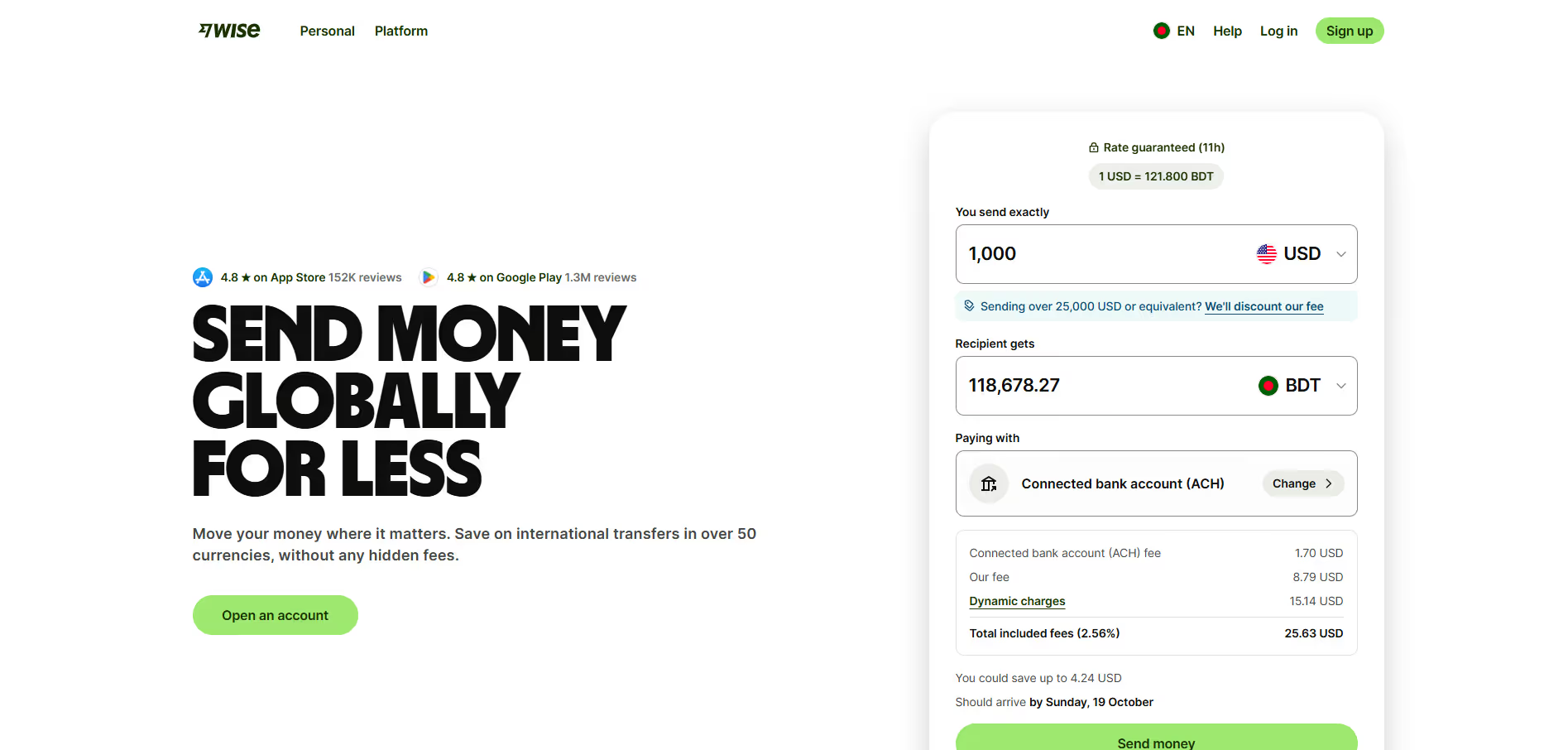
Wise
Key Applications
- International Money Transfers: Sending funds globally to family, friends, or for business transactions with competitive rates and low fees.
- Multi-Currency Accounts: Holding, managing, and converting balances across more than 50 currencies within a single account.
- Business Payments: Facilitating international payroll, vendor payments, and receiving revenue from global clients with local bank details.
- Travel & Spending: Using a Wise debit card for spending abroad in local currencies, avoiding high foreign transaction fees.
Who It’s For
Individuals requiring international money transfers, expats, freelancers, international students, small to medium-sized businesses with international operations, and frequent travelers seeking cost-effective currency management solutions.
Pros & Cons
| Pros |
Cons |
| ✔️ Real mid-market exchange rates with transparent fees. |
✖️ Not a traditional bank; lacks some banking features like loans. |
| ✔️ Fast international transfers, often completed within hours or same day. |
✖️ Transfer limits may apply, especially for larger or first-time transactions. |
| ✔️ Multi-currency account with local bank details for various regions. |
✖️ Customer support is primarily online, with limited phone or branch access. |
| Pros |
Cons |
| ✔ Very beginner-friendly |
✖ Limited features compared to Others |
| ✔ Clean interface |
✖ Less feature depth than others |
| ✔ Helpful community and resources |
✖ Can feel slower at scale |
How It Compares
- Versus Traditional Banks: Wise consistently offers more favorable exchange rates (mid-market) and significantly lower fees for international transfers, often with faster processing times, compared to conventional banking services.
- Versus PayPal: Wise generally provides better exchange rates and lower overall costs for larger international money transfers, while PayPal remains strong for online purchases and smaller peer-to-peer payments within its ecosystem.
- Versus Revolut: Both provide multi-currency accounts and international transfers. Wise often has a slight edge in direct currency conversion transparency and lower fees for international transfers, while Revolut may offer broader budgeting tools and lifestyle features.
Bullet Point Features
- Mid-market exchange rates
- Multi-currency account (50+ currencies)
- Local bank details (USD, EUR, GBP, AUD, CAD, etc.)
- Wise debit card for global spending
- Batch payments for businesses
- Transparent fee structure
Frequently Asked Questions
Find quick answers about this tool’s features, usage ,Compares, and support to get started with confidence.
What is Wise and what does it do?

Wise (formerly TransferWise) is a financial technology platform that enables individuals and businesses to send, receive, and manage money internationally at low cost. It provides real exchange rates and transparent fees, making cross-border payments faster and more affordable than traditional banks.
How does Wise simplify international money transfers?

Wise allows users to send money to over 80 countries using real-time exchange rates with minimal fees. Recipients can receive funds directly in their bank accounts, and transfers are often faster than traditional banking systems, making it ideal for personal or business payments across borders.
What features does Wise offer for personal and business use?

Wise offers features such as multi-currency accounts, international transfers, borderless debit cards, batch payments, and real-time tracking of payments. Businesses can manage global payroll, pay contractors, and hold funds in multiple currencies without high conversion costs.
Can Wise integrate with other tools and platforms?

Yes — Wise integrates with business tools such as Xero, QuickBooks, and accounting platforms, allowing seamless reconciliation of payments and easier management of international financial workflows.
Who should use Wise and what benefits can they expect?

Wise is ideal for freelancers, small businesses, remote teams, and individuals who need to manage international payments. Users can expect lower fees, faster transfers, transparent exchange rates, multi-currency management, and easier cross-border financial operations, making global transactions simple and cost-effective.