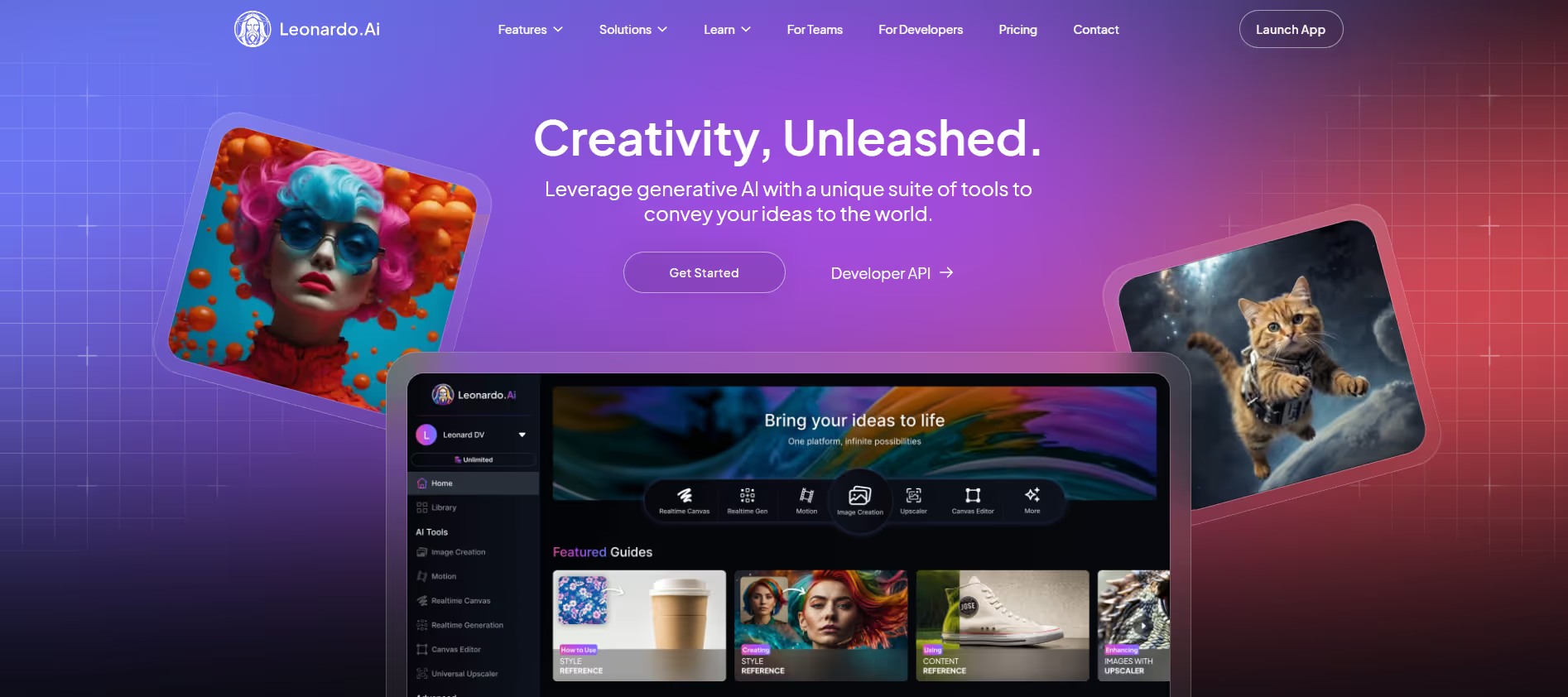
Leonardo.ai
Key Applications
- Digital Art & Illustration: Generating unique artwork, concept designs, and creative visuals for various media projects.
- Game Development Assets: Producing textures, sprites, character concepts, and environmental details for video games.
- Marketing & Advertising Content: Creating custom visuals, product mockups, and campaign graphics for branding and promotions.
- Graphic Design Enhancement: Aiding designers with AI-generated elements, backgrounds, and stylistic variations to expedite workflows.
Who It’s For
Digital artists, graphic designers, game developers, marketing professionals, content creators, and anyone requiring advanced AI-driven image generation and manipulation capabilities with a high degree of control.
Pros & Cons
| Pros |
Cons |
| ✔️ Deep control over scripts/styles to remove bloat. |
✖️ No built-in caching; needs to pair with a caching plugin. |
| ✔️ Many performance tweaks beyond basic caching (lazy load, preload, remove defaults). |
✖️ Some features require careful testing, may break theme/plugins if misconfigured. |
| ✔️ Lightweight, minimal overhead, good UI with one-click toggles. |
✖️ Premium plugin; no free version to try all features. |
| Pros |
Cons |
| ✔ Very beginner-friendly |
✖ Limited features compared to Others |
| ✔ Clean interface |
✖ Less feature depth than others |
| ✔ Helpful community and resources |
✖ Can feel slower at scale |
How It Compares
- Versus Midjourney: Leonardo.ai offers more direct control over model selection and parameters, including the ability to train custom models, often with a more traditional UI. Midjourney, conversely, is renowned for its distinct aesthetic style and strong community-driven iteration, primarily operating through Discord.
- Versus Stable Diffusion: While both are based on diffusion models, Leonardo.ai provides a more user-friendly interface and integrated features like custom model training and an AI Canvas, making complex tasks more accessible than raw Stable Diffusion implementations which often require more technical setup.
Bullet Point Features
- Advanced AI image generation from text prompts
- Custom AI model training with user datasets
- Real-time AI canvas: editing, inpainting, outpainting
- Image-to-image and prompt-to-image workflows
Frequently Asked Questions
Find quick answers about this tool’s features, usage ,Compares, and support to get started with confidence.
What is Leonardo.ai and what does it do?

Leonardo.ai is an AI-powered creative platform that enables users to generate digital art, illustrations, and concept visuals from text prompts. It is designed for artists, designers, and content creators to produce high-quality AI-generated visuals quickly and efficiently.
How does Leonardo.ai generate artwork using AI?

Leonardo.ai uses advanced generative AI models to interpret text prompts, style preferences, and optional image references to create detailed and imaginative visuals. Users can guide the AI to produce artwork that aligns with their creative vision.
What types of visuals can be created with Leonardo.ai?

Users can create illustrations, concept art, character designs, fantasy and sci-fi scenes, and stylized digital artwork. The platform supports various artistic styles, making it suitable for professional projects, social media content, and personal creative experimentation.
Is Leonardo.ai beginner-friendly?

Yes, Leonardo.ai is designed to be accessible for beginners while offering advanced features for professional creators. Users can start with simple prompts, and the AI handles the complexity of generating detailed, high-quality images.
Who should use Leonardo.ai and what benefits can they expect?

Leonardo.ai is ideal for digital artists, content creators, designers, marketers, and hobbyists. Users can expect fast and high-quality AI-generated visuals, creative flexibility, inspiration for projects, scalable content production, and a tool to bring imaginative ideas to life efficiently.