Docsbot is an AI assistant that reads, interprets, and answers questions from documents, improving productivity and internal knowledge access.
Pros & Cons:
Docsbot creates AI chatbots trained on documentation to answer user questions accurately. It helps reduce support load by making knowledge instantly accessible.
Ada is an AI customer service platform that automates chat and messaging workflows, providing instant responses and personalized support for businesses.
Pros & Cons:
Ada offers AI-powered customer support automation that resolves inquiries across channels. It helps businesses scale support while maintaining a personalized experience.
Botsonic is a conversational AI platform for building advanced chatbots capable of understanding and responding naturally in multiple languages and contexts.
Pros & Cons:
Botsonic allows users to build AI chatbots trained on their own data without coding. It’s suited for businesses wanting fast, custom support solutions.
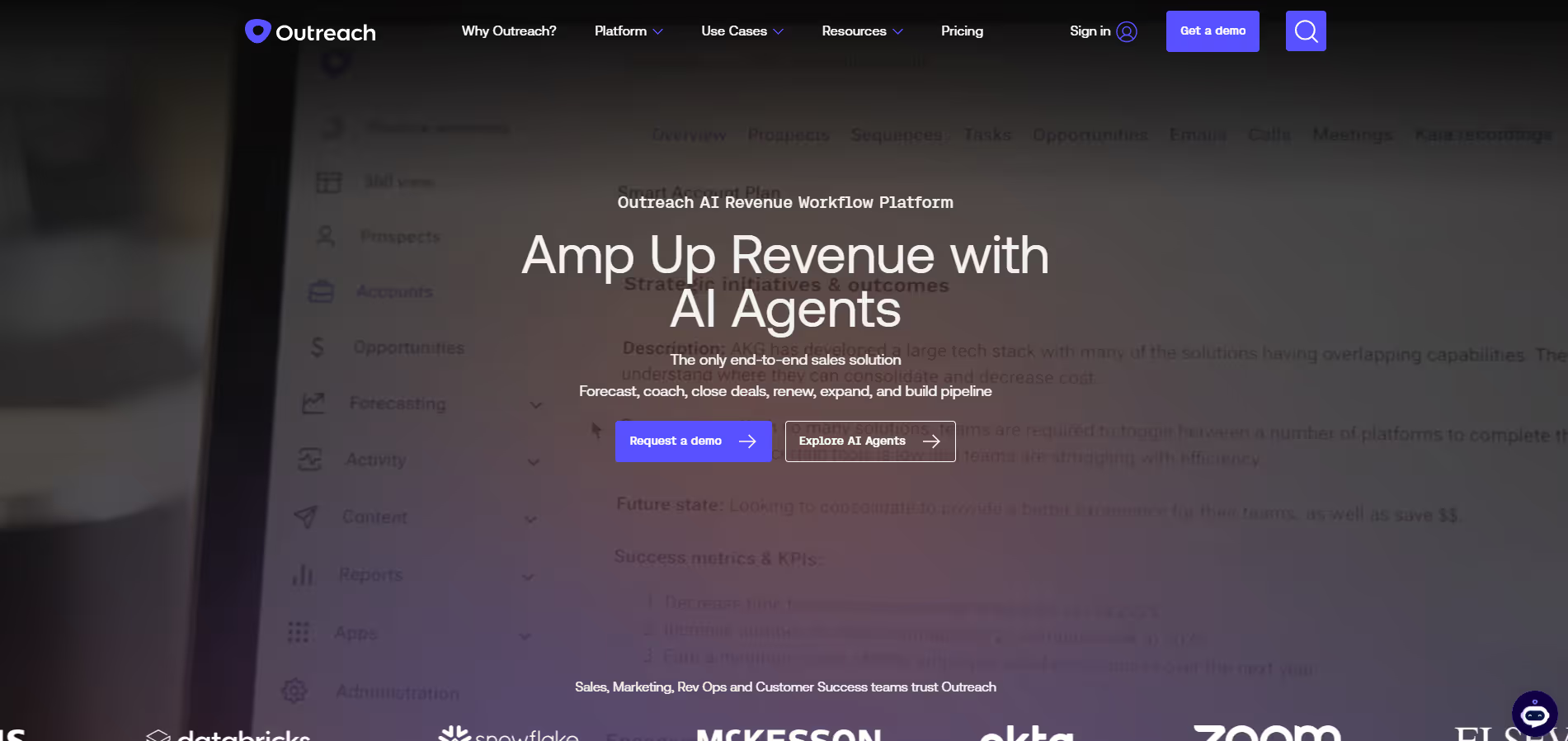
Outreach is a sales engagement platform designed to help teams accelerate pipeline growth, improve sales productivity, and increase revenue. The platform supports automating outreach workflows, sequencing emails/calls/tasks, managing multichannel touches (email, LinkedIn, phone), and integrating with CRM systems for accurate data sync. Other features include advanced analytics, machine-learning-driven insights, conversation intelligence (call transcription, objection detection, etc.), sales playbooks, forecasting, deal management, and rep coaching. Outreach is built to support mid-market to enterprise sales and revenue operations teams that need a robust, scalable tool for sales execution.
Pros & Cons:
Pros
Cons
✔️ Very powerful automation and multichannel sequences. :contentReference[oaicite:15]{index=15}
✖️ High cost per user; can be expensive for small teams. :contentReference[oaicite:16]{index=16}
✔️ Rich analytics, forecasting, and conversation intelligence. :contentReference[oaicite:17]{index=17}
✖️ Steep learning curve; setup and onboarding can take time. :contentReference[oaicite:18]{index=18}
✔️ Strong CRM integration and automatic data sync, reducing manual work. :contentReference[oaicite:19]{index=19}
✖️ Some may find features overkill if only basic email sequences are needed. :contentReference[oaicite:20]{index=20}
Bottom Line: Outreach is one of the top platforms for enterprise sales engagement. It offers deep automation, analytics, forecasting, and multichannel outreach features. If you have a sales or revenue operations team that needs structure, consistency, and data-driven insights, Outreach can drive serious ROI. However, the cost, complexity, and required setup mean it’s best suited for larger teams or businesses with higher outreach volume rather than solo users or very small teams.
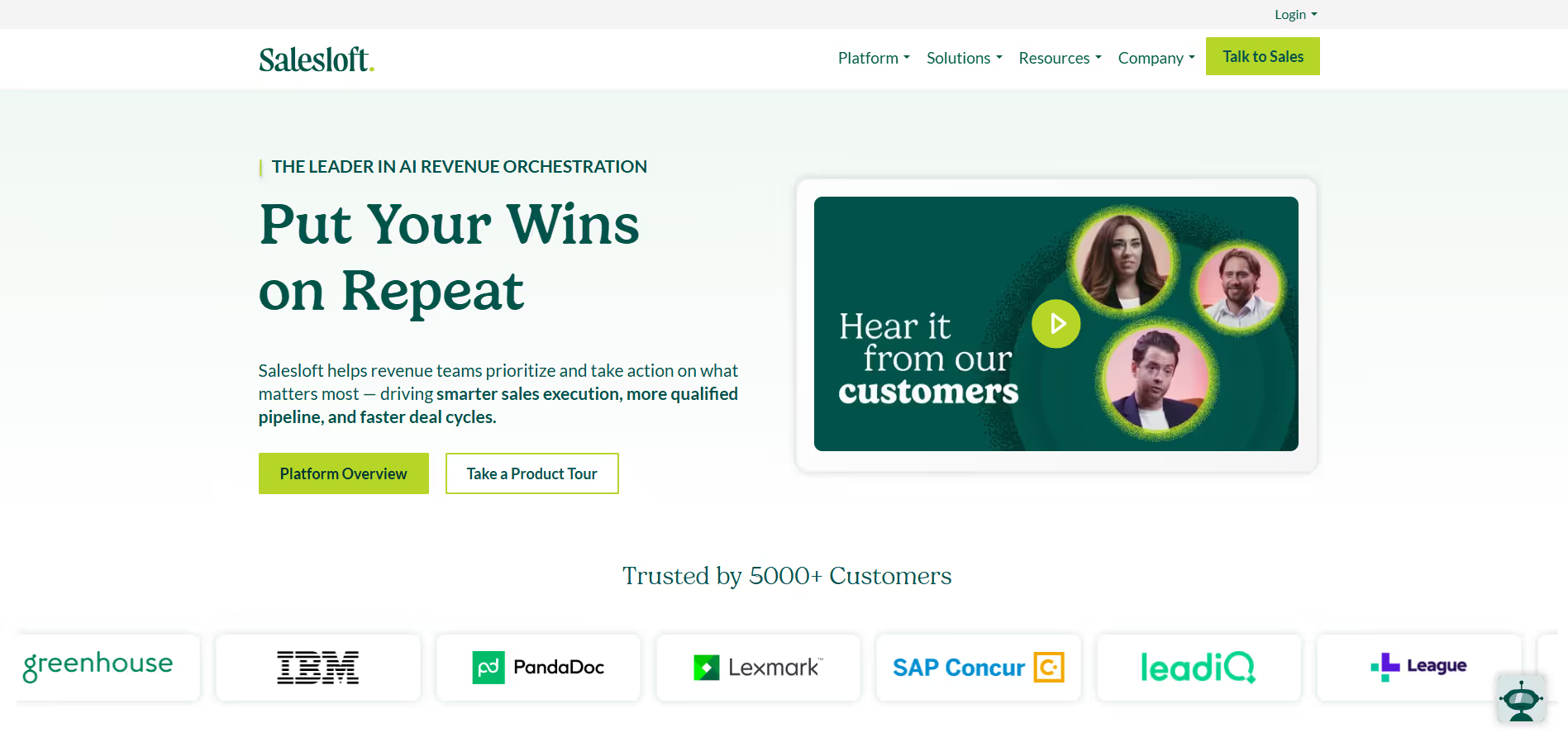
Salesloft is a comprehensive sales engagement platform used by revenue teams to drive pipeline growth, manage outreach cadences, improve seller productivity, and gain insights from sales conversations. It supports multichannel communication (email, phone/dialer, social touches), conversation intelligence, automated workflows, CRM sync, real-time analytics & forecasting, and tools for coaching and deal visibility. It’s built to help sales, account development / SDR teams, and leadership align around process, improve conversion rates, and efficiently scale outbound and inbound prospecting.
Pros & Cons:
Pros
Cons
✔️ Rich conversation intelligence and coaching features. :contentReference[oaicite:14]{index=14}
✖️ Pricing can be high for smaller teams. :contentReference[oaicite:15]{index=15}
✔️ Strong forecasting and pipeline visibility. :contentReference[oaicite:16]{index=16}
✖️ Dialer and calling add-ons cost extra. :contentReference[oaicite:17]{index=17}
✔️ Multichannel cadences keep outreach consistent and structured. :contentReference[oaicite:18]{index=18}
✖️ Steep learning curve with all features enabled. :contentReference[oaicite:19]{index=19}
Bottom Line: Salesloft is a powerful sales engagement tool built for teams looking to scale outreach, improve prospecting and forecasting, and derive insights from actual conversations. It delivers excellent value for organizations that need structure, analytics, and multichannel cadences—but expect to invest in pricing, setup, and training.
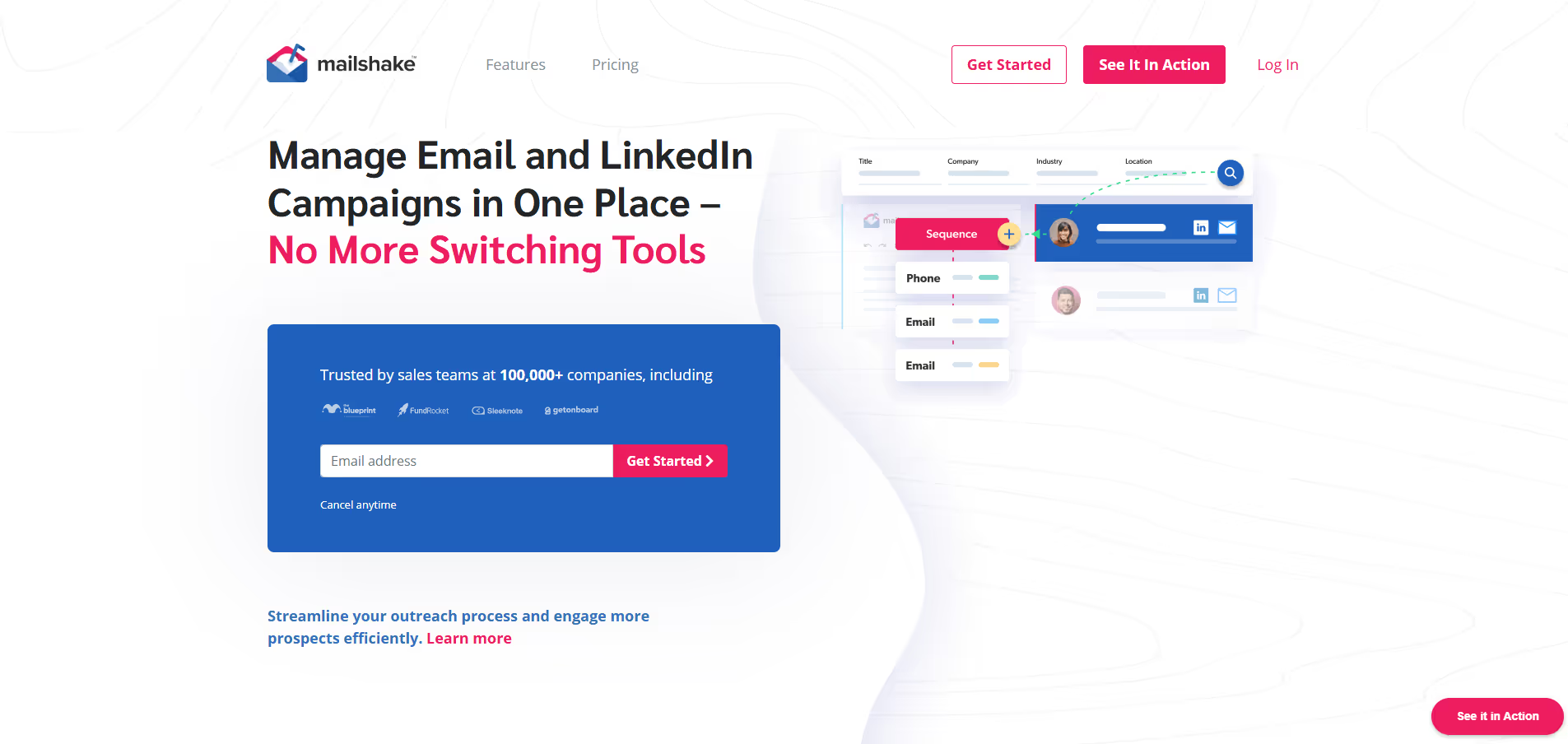
Mailshake is a sales engagement and outreach tool that helps users generate leads and engage prospects through automated email sequences, phone calls, social touches, and more. It’s built for teams wanting to scale outreach while maintaining personalization and deliverability. You can use built-in tools such as SHAKEspeare AI to help write email copy fast, A/B test your messages and follow-ups, personalize content, perform email warm-ups, manage multiple mailboxes/domains, and integrate with CRMs like Salesforce, HubSpot, and Pipedrive. Mailshake also offers lead catching, tracking opens/clicks/replies, phone dialer, LinkedIn automation, and native deliverability assistants.
✖️ Cost per user increases with added mailboxes/domains and more advanced send-volume features. :contentReference[oaicite:21]{index=21}
✔️ Good deliverability tools (warm-up, list cleaning, domain/mailbox setup). :contentReference[oaicite:22]{index=22}
✖️ No free plan; must pay to try most features. :contentReference[oaicite:23]{index=23}
✔️ Easy to use, good templates, AI-assisted writing (SHAKEspeare), solid integrations. :contentReference[oaicite:24]{index=24}
✖️ Some advanced features like LinkedIn automation or phone dialing require higher-tier plans only. :contentReference[oaicite:25]{index=25}
Bottom Line: Mailshake is a powerful outreach automation tool that balances ease of use, strong deliverability, and multichannel communication. If you're building or scaling outbound prospecting efforts—especially in sales, growth, or B2B—Mailshake offers a solid set of features. It may cost more as you scale, but for what it delivers (automation, templates, deliverability helpers, integrations), it often gives good ROI.
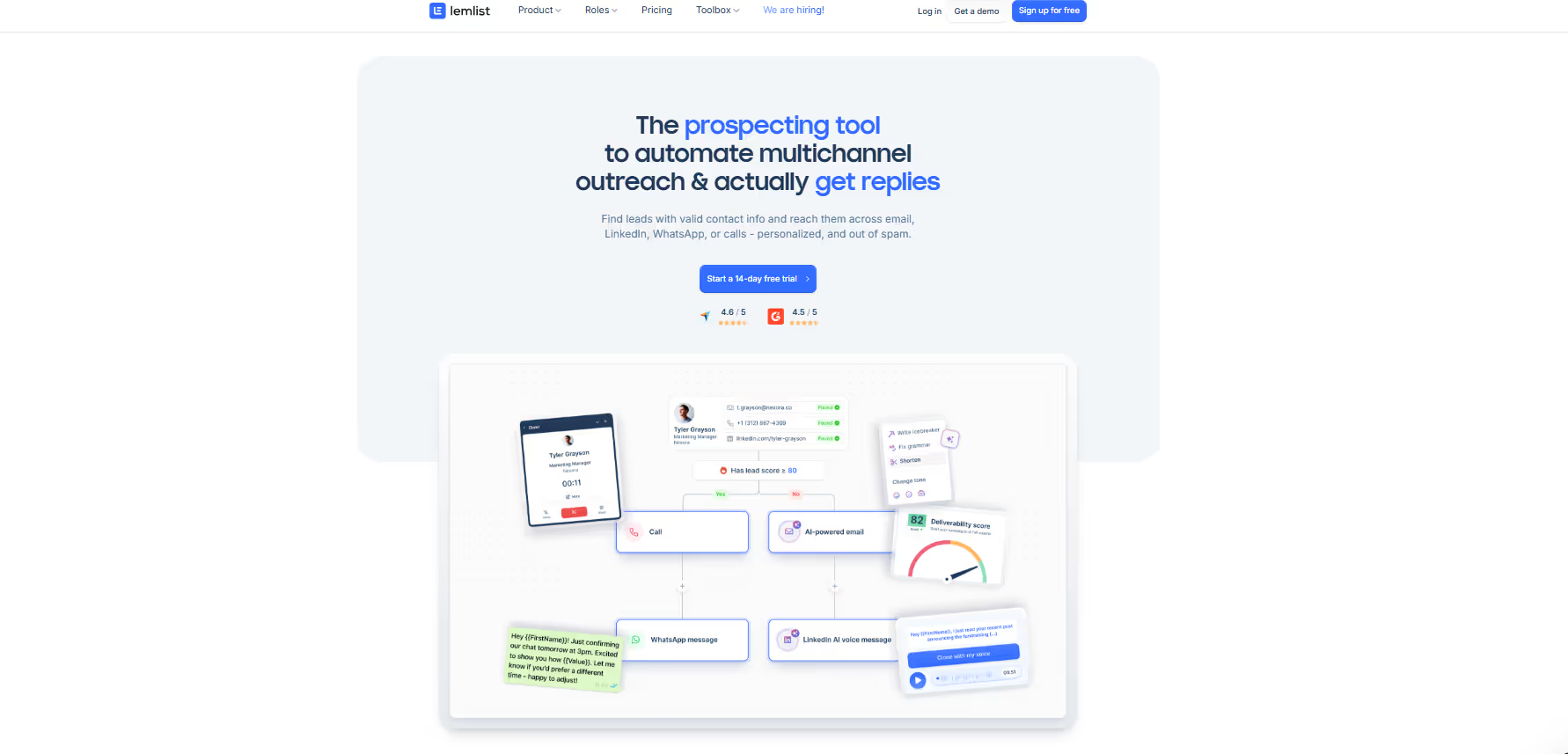
Lemlist is a cold email and sales engagement platform built to help growth teams automate outreach, improve deliverability, and personalize messages at scale. It provides a lead database (450M+ records), tools to find and verify emails and phone numbers, email warm-up (“lemwarm”) to boost sending reputation, multichannel outreach (email, LinkedIn, phone), dynamic personalization, custom workflows, and integration with popular CRMs. You can automate sequences based on recipient responses or engagement, follow up across channels, and use features like image personalization, A/B testing, liquid syntax in templates, and more. Lemlist emphasizes keeping emails out of spam while scaling outreach.
✖️ Can get expensive per user when using multichannel & high-credit usage. :contentReference[oaicite:16]{index=16}
✔️ Good deliverability tools (lemwarm) and warm-up features. :contentReference[oaicite:17]{index=17}
✖️ Some users report bugs or slow performance, especially when managing many campaigns. :contentReference[oaicite:18]{index=18}
✔️ Multichannel outreach across email, LinkedIn, phone, etc. :contentReference[oaicite:19]{index=19}
✖️ Analytics/reporting may be less advanced/rigid compared to some other outreach tools. :contentReference[oaicite:20]{index=20}
Bottom Line: Lemlist is a powerful outreach tool for growing businesses and sales teams that want to boost cold email campaigns with personalization, multichannel follow-ups, and good deliverability. While it has lots of strengths, the cost and learning curve are non-trivial. If your budget allows and you really need the richer features (like LinkedIn outreach, phone calls, lead finding), Lemlist can offer great ROI—but for simpler needs you might consider lighter or cheaper alternatives.



.png)



.svg)
.svg)

.png)
.png)


.png)
.png)



.png)
.svg)