Best for web hosting, app deployment, scalable droplets, Kubernetes hosting, managed databases, developer cloud tools.
GeneratePress
GeneratePress is a WordPress theme designed to be fast, stable, and highly customizable. It keeps the base theme lightweight for speed and performance, while premium add-ons unlock powerful modules like layout control, typography/color customization, header/footer builders, and WooCommerce support. It works with Gutenberg, page builders, and GenerateBlocks to allow advanced design options without heavy bloat. The premium version includes a Site Library of professionally designed starter templates, patterns, and features for users who want more control. Regular updates, clean code, and strong focus on performance and accessibility make GeneratePress ideal for both beginners and advanced users wanting a reliable foundation.
Pros & Cons:
Pros
Cons
✔️ Very lightweight and fast-performing base theme.
✖️ Free version lacks many premium modules and starter templates.
✔️ High customizability via layout, typography, headers, and blocks.
✖️ Advanced features require technical knowledge (hooks, filters).
✔️ Clean, accessible code, regular updates, and strong documentation.
✖️ Smaller library of pre-made demo designs compared to some competitors.
Bottom Line: GeneratePress is an excellent theme for anyone who wants strong performance, clean design, and flexibility. It’s especially great if you prioritize speed and minimal bloat, while still having the option to unlock powerful premium features when needed.
OceanWP is a multipurpose WordPress theme that offers extensive customization and performance while maintaining accessibility for both beginners and advanced users. The core theme is free and already includes a wealth of features like responsive design, header & footer layout options, global typography settings, layout controls per page/post/shop, and built-in compatibility with page builders and WooCommerce. For more advanced functionality, OceanWP offers premium extensions (e.g., for sticky headers/footers, popups, custom product gallery layouts) and a Pro Bundle which gives access to demo libraries and enhanced features. The modular architecture means you can enable only the features you need, keeping your website fast and lightweight. OceanWP is an excellent option for users who want significant free functionality but the ability to upgrade when needed.
Pros & Cons:
Pros
Cons
✔️ Core theme is free and already loaded with many useful features.
✖️ Some free demos require premium extensions to fully match demo look. :contentReference[oaicite:14]{index=14}
✖️ Premium extension costs add up if you need many features. :contentReference[oaicite:15]{index=15}
✔️ Modular performance: disable unused features, responsive and lightweight.
✖️ Learning curve for new users with many conditional/customization options. :contentReference[oaicite:16]{index=16}
Bottom Line: OceanWP offers an excellent balance of free and premium features, letting users start with a highly capable theme and upgrade as needed. If you want strong WooCommerce integration, flexible layout control, and good performance, OceanWP is a solid choice — especially if you don’t need everything out of the box, or are okay adding premium extensions later.
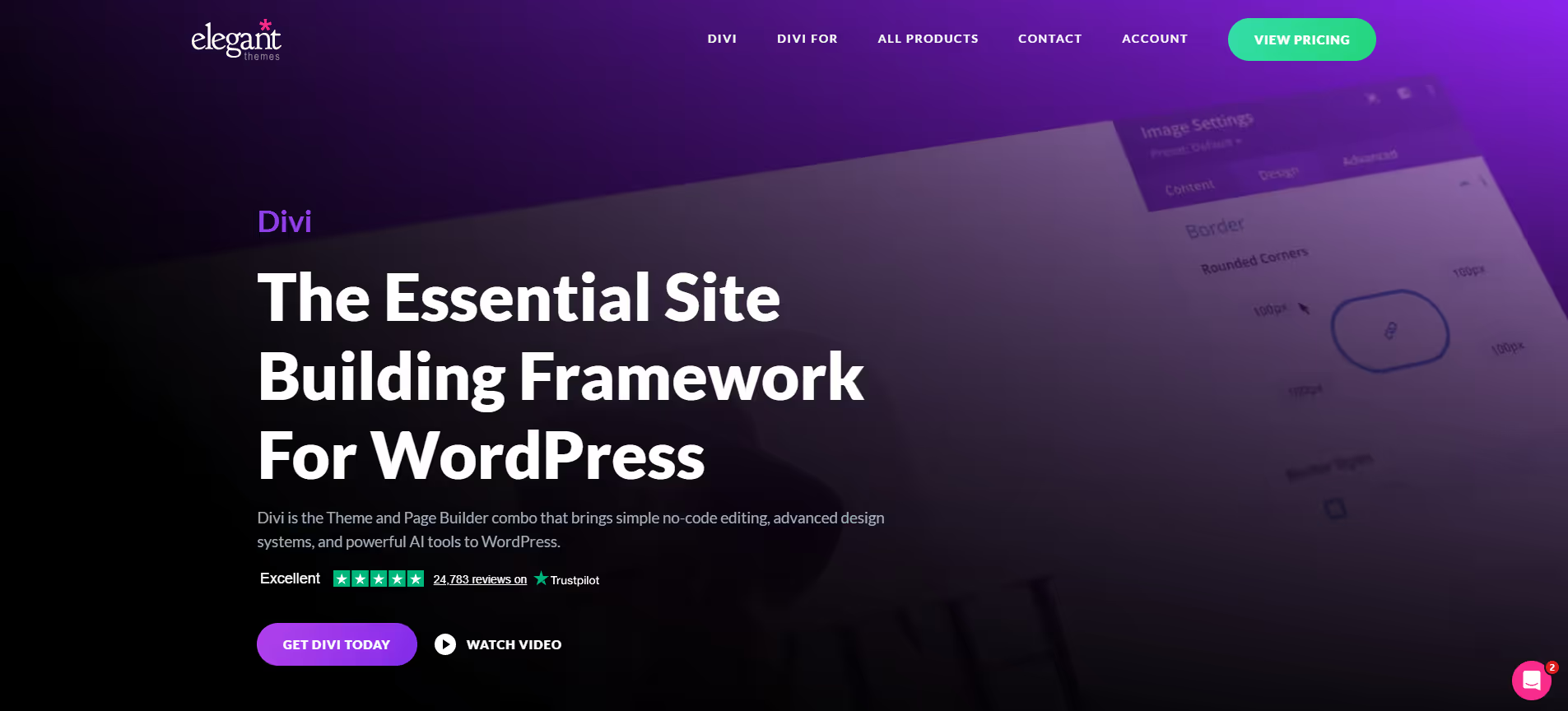
Divi is a comprehensive WordPress theme + page builder developed by Elegant Themes. It offers a visual drag-and-drop builder, hundreds of templates/layout packs, global design controls (fonts, colors, spacing), split testing capabilities, and tools to build virtually any kind of website—from blogs and portfolios to eCommerce and membership sites. Divi also includes built-in features like conditional display, content modules, and continuous updates. While its rich feature set makes it powerful, it demands optimization and learning for best performance. Updates over time have aimed to reduce bloat and improve load speed, but depending on how many modules and features you use, Divi can become heavy. Divi’s strength lies in flexibility and the richness of its ecosystem.
Pros & Cons:
Pros
Cons
✔️ Powerful visual builder with many design modules and templates.
✖️ Can be heavy; performance depends on optimization.
✔️ Unlimited site usage, lifetime option provides good long-term value.
✖️ No free version; upfront cost required before using.
✔️ Built-in split testing, global styles, WooCommerce integration.
✖️ Steeper learning curve for beginners due to many settings.
Bottom Line: Divi is a full-featured, premium WordPress theme + page builder ideal for those who want flexibility, rich design tools, and long-term value. If you’re ready to invest and optimize, it can power highly customized and high-performance websites; for very simple or minimal sites, its breadth may be more than needed.
Blocksy is a versatile WordPress theme that combines speed, flexibility, and design control, making it ideal for bloggers, businesses, and WooCommerce stores. The free version already offers many customization options, starter templates, header/footer builders, and performance-friendly design. Upgrading to Blocksy Pro (or installing the Blocksy Companion Premium plugin) unlocks advanced functionality such as conditional headers, footer & sidebar layouts, mega menus, WooCommerce enhancements, content blocks (hooks), and custom sidebars. The theme is well optimized for performance (Core Web Vitals, lazy loading, modular loading of assets) and integrates nicely with page builders and Gutenberg. Its modular architecture allows users to enable what they need, keeping the site lean and fast.
Pros & Cons:
"
Pros
Cons
✔️ Lightweight, modular, and performance-focused design.
✖️ Starter/demo site library is smaller than some competitors.
✔️ Rich free version with many useful features.
✖️ Pro features for unlimited sites are relatively expensive.
✔️ Advanced WooCommerce support and conditional header/footer options.
✖️ Learning curve for new users unfamiliar with conditional layouts.
"
Bottom Line: Blocksy strikes a strong balance between speed, customization, and value. For users who want more than what most free themes offer — especially for WooCommerce or sites needing dynamic layouts — Blocksy Pro is worth considering, while the free version already gives a lot for basic sites.
Astra is a popular WordPress theme designed for performance, flexibility, and ease of use. It provides a lightweight framework that ensures fast loading times and seamless compatibility with major page builders like Elementor, Beaver Builder, and Gutenberg. Astra includes pre-built starter templates, customizable headers, footers, and layouts, allowing users to design professional websites without coding. With a focus on SEO optimization, accessibility, and responsive design, Astra ensures websites look great on all devices. Its modular architecture enables users to enable only the features they need, keeping sites fast and efficient. Astra is ideal for bloggers, businesses, e-commerce sites, and developers who want a highly adaptable, lightweight theme that balances speed, design, and functionality.
Pros & Cons:
"
Pros
Cons
✔️ Lightweight, fast, and highly customizable WordPress theme.
✖️ Some advanced features require the Pro version.
✔️ Extensive starter templates and page builder compatibility.
✖️ Free version has limited design modules.
✔️ SEO-optimized, responsive, and WooCommerce-ready for e-commerce.
✖️ Customization can be overwhelming for beginners.
"
Bottom Line: Astra is a fast, lightweight, and flexible WordPress theme ideal for bloggers, businesses, and developers. Its starter templates, page builder compatibility, and WooCommerce readiness make it perfect for building high-performance, visually appealing websites with ease.
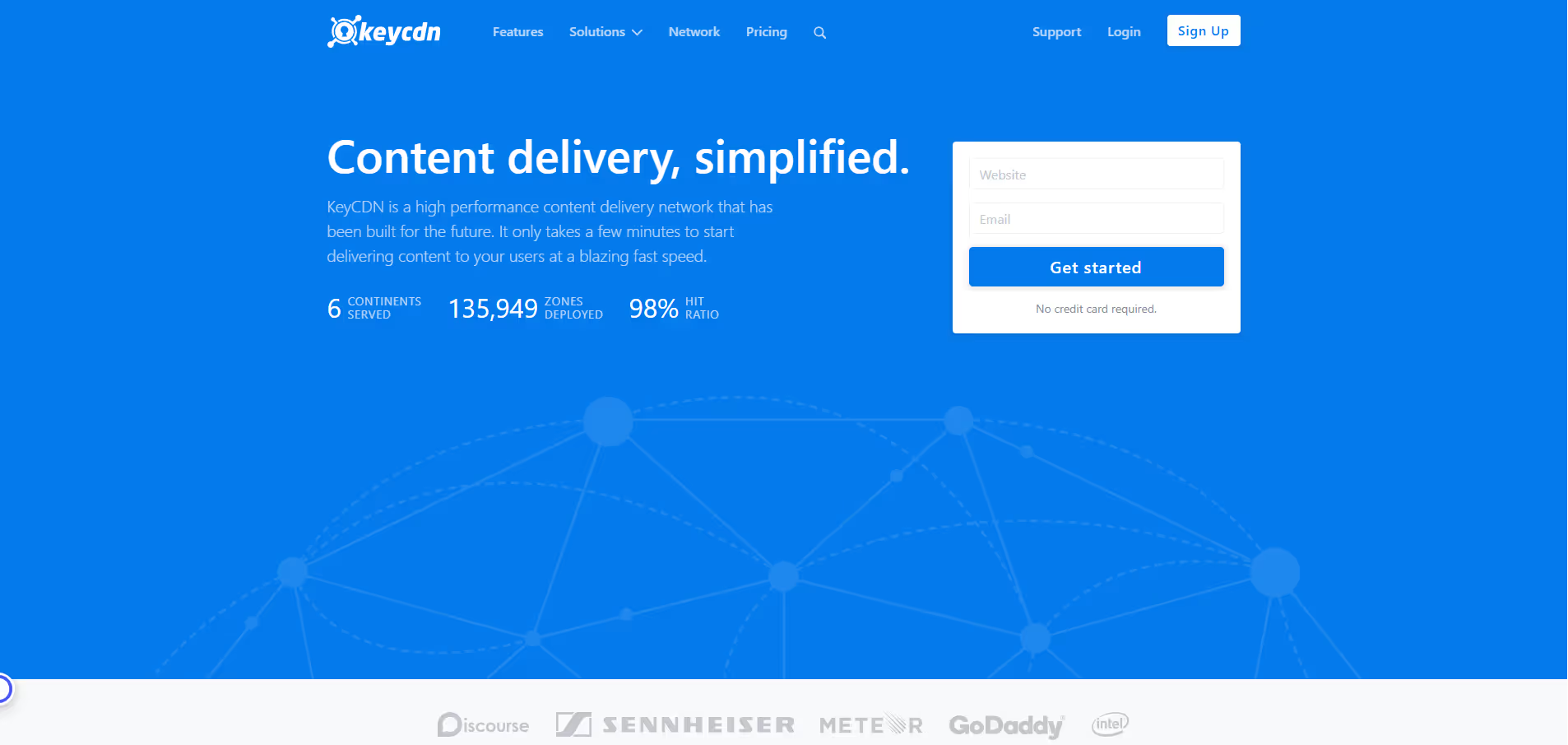
KeyCDN offers a comprehensive suite of content delivery services, leveraging a global network of SSD-optimized edge servers to cache and serve content closer to end-users. This significantly reduces server load and data transfer times. Beyond basic content caching, KeyCDN integrates features like Brotli compression, custom SSL, DDoS protection, Origin Shield, and real-time analytics, making it a powerful solution for developers, e-commerce platforms, and businesses focused on web performance and reliability. Its intuitive dashboard and API enable efficient management and integration into existing workflows.
Pros & Cons:
Pros
Cons
✔️ Excellent performance with a global network of SSD-optimized servers.
✖️ Minimum monthly spend may be prohibitive for very low-traffic sites.
✔️ Highly competitive and transparent pay-as-you-go pricing model.
✖️ While offering good security, it may not match the comprehensive free WAF/DNS features of some competitors.
✔️ User-friendly dashboard and extensive features like Brotli, Custom SSL, and Origin Shield.
✖️ Advanced configurations might still require some technical understanding.
KeyCDN delivers a powerful and cost-effective content delivery solution that significantly boosts website speed and reliability. With its global network, advanced features, and transparent pricing, it's an excellent choice for businesses and developers seeking to optimize web performance and provide a superior user experience worldwide.
StackPath offers a unified platform for enhancing website performance and security. Its global CDN ensures low-latency content delivery, while its WAF and DDoS protection guard against sophisticated cyber threats. The platform also includes managed DNS and versatile Edge Compute capabilities, allowing businesses to deploy and run applications closer to end-users for superior speed and responsiveness, all managed through a single console.
Pros & Cons:
Pros
Cons
✔️ Unified platform for CDN, WAF, DDoS, and DNS, simplifying management.
✖️ Network footprint is smaller compared to global leaders like Cloudflare or Akamai.
✔️ Strong focus on integrated security features at the network's edge.
✖️ Advanced enterprise-level customization options may be less extensive than specialized solutions.
✔️ Developer-friendly APIs and versatile Edge Compute capabilities.
✖️ Primarily a paid service with limited free offerings, unlike some competitors.
StackPath offers a compelling, integrated edge platform that simplifies content delivery and security for businesses. Its robust WAF, DDoS protection, and global CDN, coupled with edge compute capabilities, make it an excellent choice for organizations prioritizing performance, security, and operational efficiency through a unified management experience.
BunnyCDN provides a robust and cost-effective content delivery solution, enabling businesses and developers to serve static and dynamic content to users worldwide at lightning-fast speeds. It leverages a global network of strategically located Points of Presence (PoPs), advanced caching mechanisms, and optimization features like Brotli compression and HTTP/2 to significantly improve page load times and user experience. Beyond standard CDN services, it offers complementary features such as Bunny Optimizer for real-time image manipulation, Bunny Stream for video delivery, and a powerful rules engine for granular control over content delivery.
✖️ While providing DDoS protection, it lacks the extensive security suite of some dedicated platforms.
✔️ Exceptional global performance with a vast network of PoPs.
✖️ Advanced configurations might require a certain level of technical expertise.
✔️ Robust feature set including Bunny Optimizer and Bunny Stream.
✖️ No perpetual free tier available, only a trial period.
✔️ Granular control over content delivery via powerful edge rules.
✖️ Less brand recognition compared to larger, more established CDN providers.
BunnyCDN stands out as an exceptionally fast, feature-rich, and affordable CDN service, ideal for businesses and developers seeking to optimize content delivery and improve user experience without compromising on performance or budget.
Azure provides Infrastructure as a Service (IaaS), Platform as a Service (PaaS), and Software as a Service (SaaS) solutions, supporting a wide range of programming languages, tools, and frameworks, including both Microsoft-specific and third-party software. It offers global reach, scalability, robust security, and deep integration with on-premise environments and Microsoft's enterprise products.
Pros & Cons:
Pros
Cons
✔️ Comprehensive suite of services for IaaS, PaaS, and SaaS.
✖️ Cost management and optimization can be complex without careful planning.
✔️ Strong hybrid cloud capabilities and integration with existing Microsoft infrastructure.
✖️ Steep learning curve due to the vast number of services and configuration options.
✔️ Robust enterprise-grade security, compliance, and global data center presence.
✖️ Potential for vendor lock-in for organizations heavily invested in Microsoft technologies.
Microsoft Azure stands as a leading enterprise-grade cloud platform, empowering organizations with a broad spectrum of services for digital transformation, from scalable infrastructure to advanced AI and data analytics. Its hybrid cloud strengths and deep integration with Microsoft's ecosystem make it a powerful choice for businesses seeking comprehensive and reliable cloud solutions.











.svg)
.svg)
.svg)








.avif)
.avif)

.avif)

.avif)

.jpeg)