Best for web hosting, app deployment, scalable droplets, Kubernetes hosting, managed databases, developer cloud tools.
ServerPilot
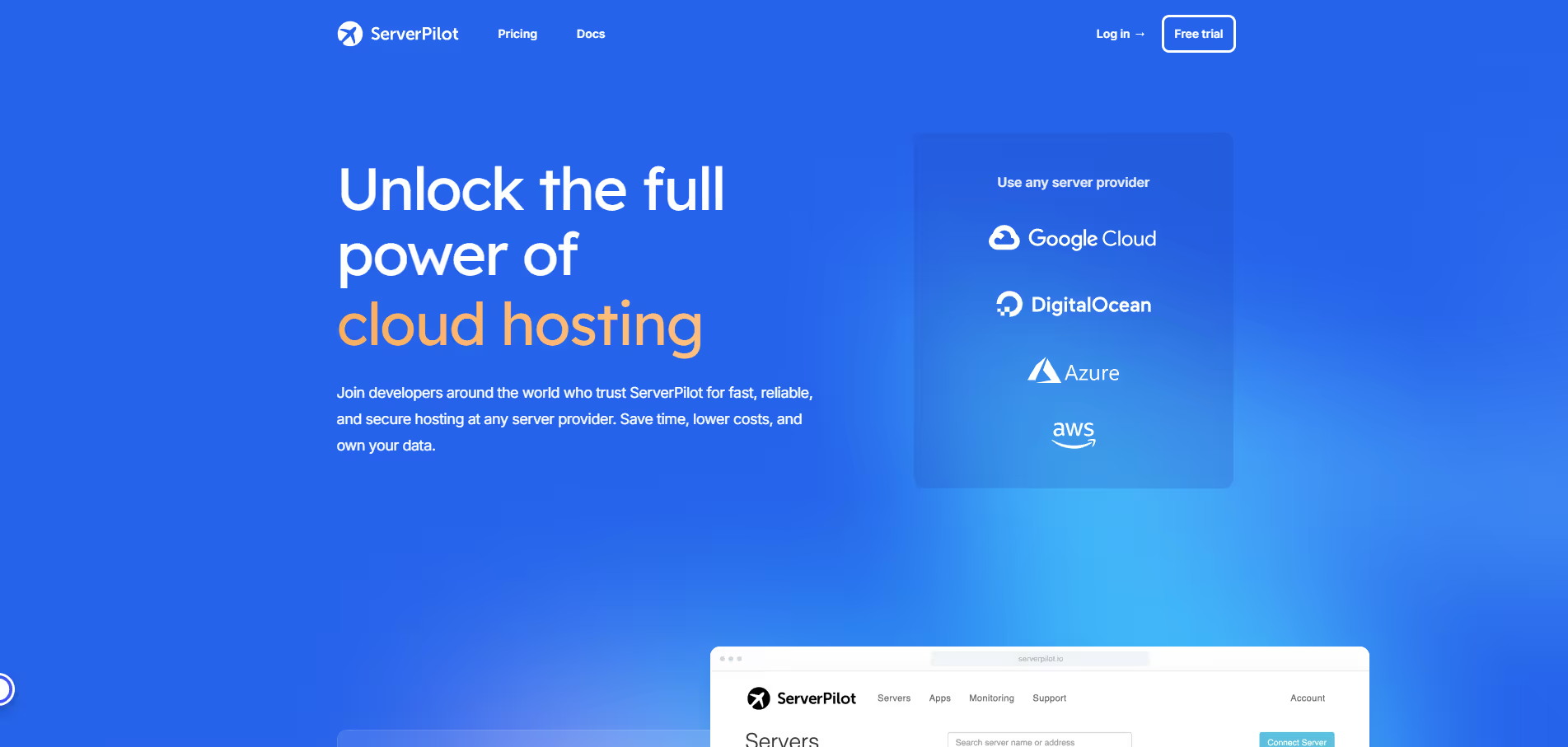
ServerPilot is a robust server management panel designed for PHP applications, especially popular with WordPress, Laravel, and Symfony users. It simplifies the deployment, configuration, and maintenance of web servers on various cloud providers like DigitalOcean, Linode, Vultr, and AWS. By offering an intuitive dashboard and automating complex server tasks, ServerPilot significantly reduces the operational overhead associated with running high-performance web applications. It handles Nginx, Apache, MySQL, and PHP setup, alongside continuous security updates and server monitoring.
Pros & Cons:
Pros
Cons
✔️ Highly optimized Nginx/Apache/PHP stack for performance.
✖️ Primarily focused on PHP applications; less suitable for other languages.
✔️ Excellent security with automated updates, firewall, and SSL.
✖️ Pricing can scale up with many applications, becoming more expensive than some alternatives.
✔️ Simple, intuitive dashboard for managing servers and apps on major cloud VPS.
✖️ Lacks advanced features like email hosting or integrated Git deployment tools.
ServerPilot offers a powerful, secure, and user-friendly control panel for managing PHP applications on cloud VPS servers. It excels at automating server configuration and maintenance, making it an indispensable tool for developers and agencies focused on performance and efficiency for their PHP-based websites and applications.
RunCloud offers a comprehensive solution for server orchestration, enabling users to easily provision, manage, and monitor their virtual private servers (VPS) or dedicated servers across various cloud providers. It automates common server tasks such as setting up web servers (Nginx, Apache), databases (MySQL, PostgreSQL), and PHP environments, along with providing security enhancements and Git deployment integration. This platform aims to reduce the complexity of server administration, allowing developers and businesses to focus on their applications rather than infrastructure management.
Pros & Cons:
Pros
Cons
✔️ Deep control over scripts/styles to remove bloat.
✖️ No built-in caching; needs to pair with a caching plugin.
✖️ Some features require careful testing, may break theme/plugins if misconfigured.
✔️ Lightweight, minimal overhead, good UI with one-click toggles.
✖️ Premium plugin; no free version to try all features.
RunCloud excels as a developer-centric server management panel, providing a powerful yet intuitive platform for deploying and maintaining high-performance PHP applications on cloud infrastructure, making complex server tasks accessible to a broader audience.
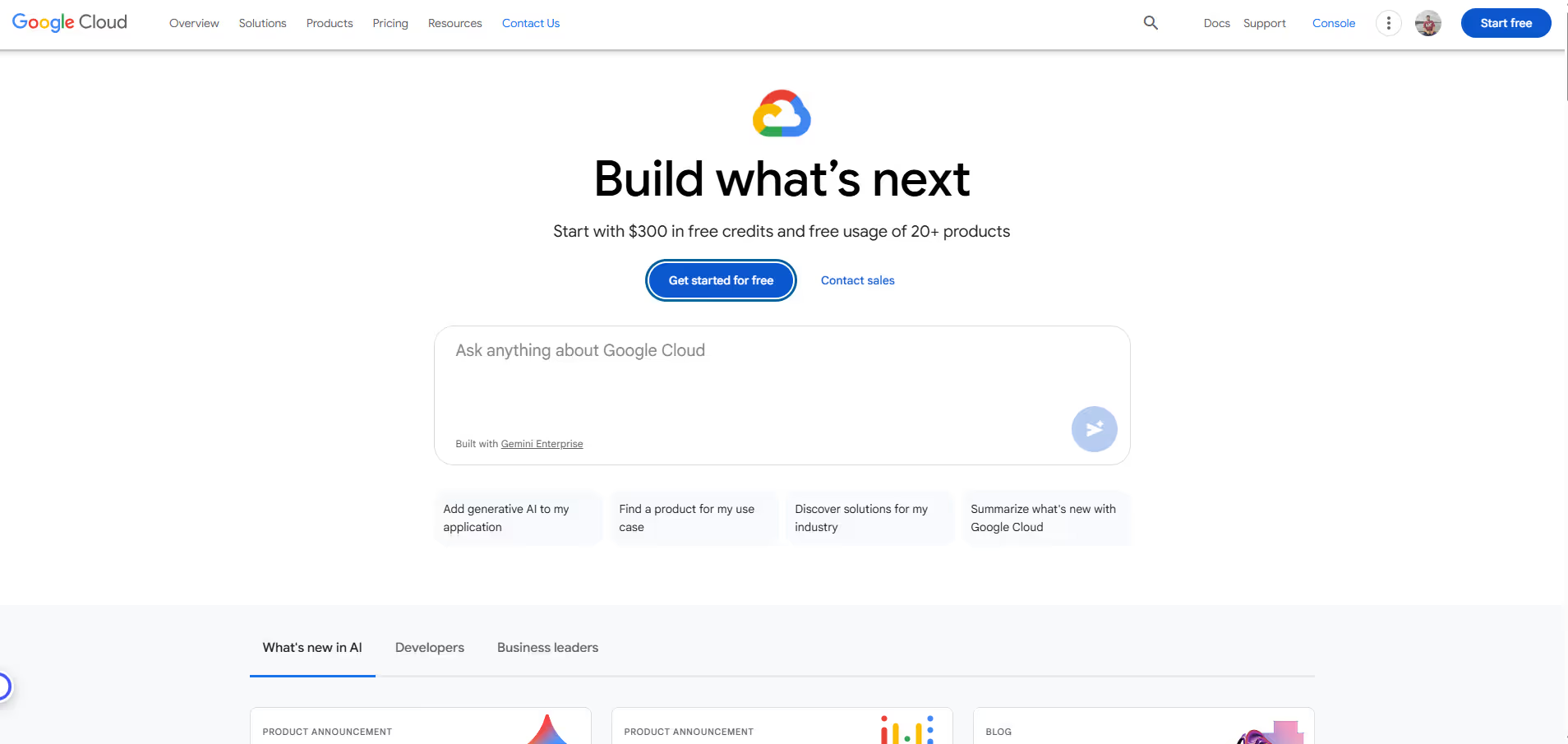
Google Cloud empowers organizations to leverage Google's robust, secure, and globally distributed infrastructure for their digital transformation initiatives. It offers a powerful ecosystem for developers and enterprises to innovate faster, operate more efficiently, and securely store and process data, with a significant emphasis on AI/ML capabilities, open-source compatibility, and advanced networking infrastructure. GCP caters to diverse workloads, from scalable web applications and advanced data analytics to complex enterprise solutions and hybrid cloud deployments.
Pros & Cons:
Pros
Cons
✔️ Leading capabilities in AI, Machine Learning, and Big Data analytics.
✖️ Smaller market share and less extensive service breadth compared to major competitors.
✔️ Industry-leading managed Kubernetes service (GKE) and strong open-source support.
✖️ Learning curve for users unfamiliar with Google's specific cloud console and terminology.
✔️ Robust global network infrastructure and live migration features for VMs.
✖️ Cost optimization can be complex without dedicated expertise or tooling.
✔️ Strong focus on sustainability and carbon-neutral cloud operations.
✖️ Ecosystem and third-party integrations may be less mature than older platforms.
Bottom Line: Google Cloud offers a powerful, globally distributed, and highly innovative cloud platform, particularly excelling in AI/ML, data analytics, and containerization. Its strong commitment to open-source and cutting-edge technologies makes it an excellent choice for modern application development and data-intensive workloads, though it requires careful cost management and familiarity with its distinct ecosystem.
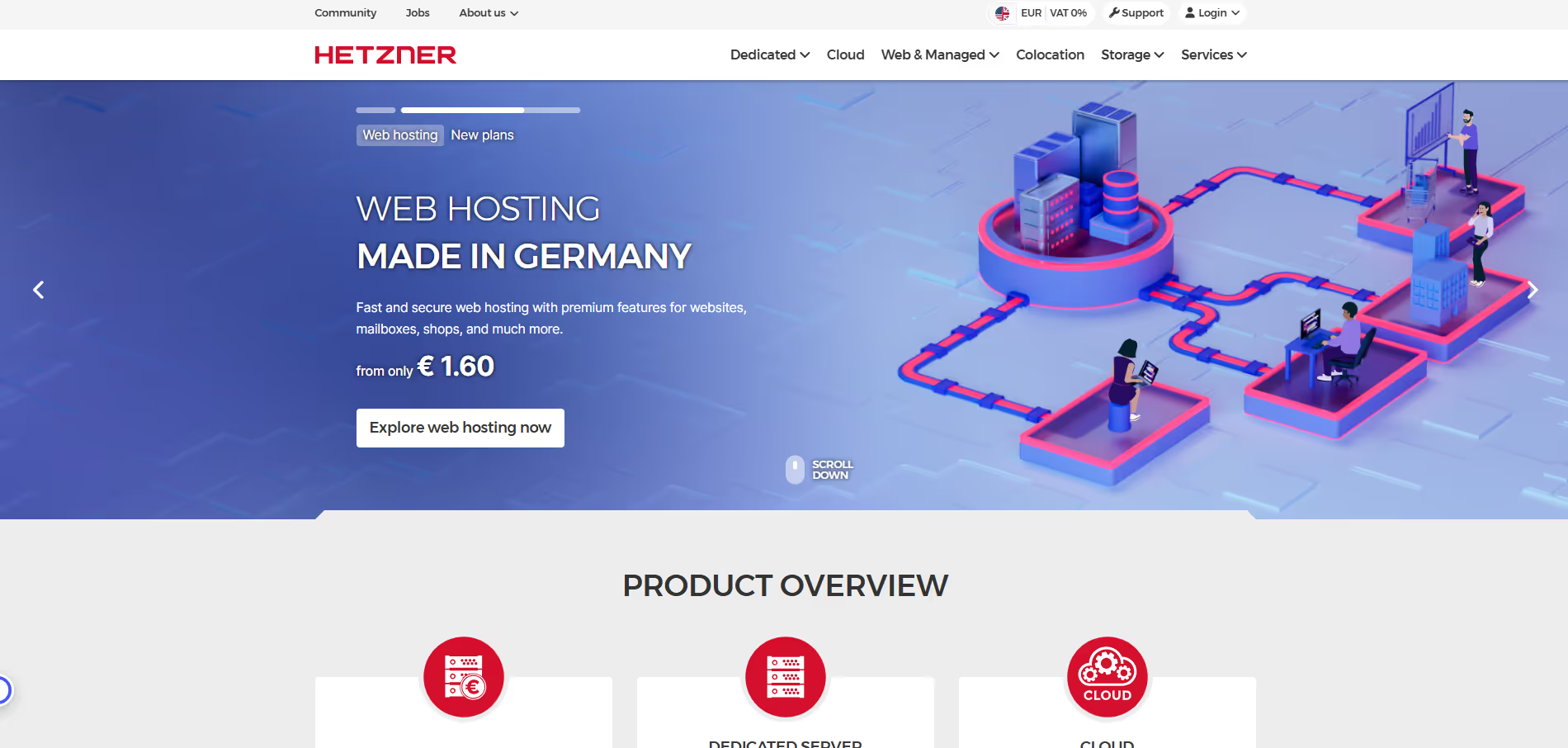
Hetzner Online GmbH offers a comprehensive portfolio of hosting products, including dedicated root servers, managed servers, cloud servers (Hetzner Cloud), web hosting packages, and colocation services. With strategically located data centers in Germany, Finland, and the USA, Hetzner emphasizes robust hardware, redundant network connectivity, and transparent pricing. Its offerings are popular among users who prioritize performance, affordability, and data privacy, particularly given its European base and adherence to strict data protection regulations.
Pros & Cons:
Pros
Cons
✔️ Excellent price-to-performance ratio for dedicated and cloud servers.
✖️ Customer support is primarily ticket-based; limited immediate assistance.
✔️ Robust infrastructure, high uptime, and fast network connectivity.
✖️ Less extensive range of managed services compared to hyperscale cloud providers.
✔️ Strong data privacy compliance due to European data center locations.
✖️ Requires a good level of technical knowledge for server administration.
Hetzner stands out as a top choice for users seeking powerful, reliable, and exceptionally cost-effective hosting and cloud infrastructure, especially those who value performance and data privacy and are equipped to manage their own server environments. Its competitive pricing and robust hardware make it a strong alternative to more expensive providers.
SpinupWP streamlines the process of deploying and managing WordPress websites on popular cloud providers like DigitalOcean, AWS, Linode, and Vultr. It automates server configuration with Nginx, PHP-FPM, MySQL, and Redis, ensuring optimal performance and security. Users gain robust control over their server environment, from provisioning new sites and deploying code via Git to managing SSL certificates and setting up advanced caching, all through an intuitive web interface.
Pros & Cons:
Pros
Cons
✔️ Highly optimized for WordPress performance using Nginx, PHP-FPM, and Redis.
✖️ Requires users to provision and manage their own cloud server provider accounts (e.g., DigitalOcean, AWS, Linode).
✔️ Provides direct control over your chosen cloud server infrastructure, offering flexibility and potential cost savings.
✖️ No built-in email hosting; requires integration with an external email service.
✔️ Streamlined Git deployment, staging environments, and WP-CLI integration for developer-centric workflows.
✖️ Assumes a degree of technical proficiency in server management and WordPress deployment.
✔️ Robust security features including firewalls, automated SSL, and secure user management.
✖️ Not a fully "managed" WordPress host in the sense of providing application-level support or proprietary hosting infrastructure.
✔️ Modern, intuitive user interface designed specifically for WordPress site management.
✖️ Only supports WordPress, not suitable for other application types.
SpinupWP is an exceptional choice for WordPress professionals and agencies seeking a powerful, developer-friendly server control panel that leverages cloud infrastructure for unparalleled performance, security, and workflow efficiency.
Amazon Web Services (AWS) is a leading cloud computing platform that provides a wide range of infrastructure and software services, including computing power, storage solutions, databases, AI tools, and analytics. Businesses use AWS to build scalable, secure, and cost-effective digital environments for applications, websites, and enterprise systems. With data centers around the globe, AWS ensures high availability and reliability. Its AI and machine learning tools—such as SageMaker and Rekognition—enable developers to create intelligent applications with ease. AWS also offers tools for DevOps automation, content delivery, and cybersecurity. From startups to large enterprises, AWS supports diverse workloads with flexible pricing and robust security.
Pros & Cons:
Pros
Cons
✔️ Highly scalable and reliable cloud infrastructure.
✖️ Pricing can become complex with high usage.
✔️ Wide range of services including AI, storage, and databases.
✖️ Requires technical expertise to manage effectively.
✔️ Global availability with strong security and compliance features.
✖️ Learning curve for beginners and small teams.
Bottom Line: AWS is a leading cloud platform offering scalable infrastructure, AI tools, and automation solutions for businesses of any size. It’s perfect for developers and organizations seeking performance, flexibility, and global scalability—though its cost and complexity may challenge smaller teams.
Vultr is a cloud hosting provider delivering virtual private servers (VPS), bare metal servers, and block storage solutions. It provides high-performance cloud infrastructure with SSD storage, flexible server configurations, and multiple global data centers. Vultr emphasizes simplicity and scalability, allowing users to deploy servers quickly and customize CPU, RAM, and storage resources as needed. It includes features like snapshots, private networking, automated backups, and a user-friendly control panel. Vultr is suitable for developers, startups, and businesses that need fast, reliable, and cost-effective cloud hosting for websites, applications, or databases. Its global presence ensures low latency and excellent performance for users worldwide.
Pros & Cons:
Pros
Cons
✔️ Fast and reliable cloud VPS with global data centers.
✖️ Requires technical knowledge for advanced server configuration.
✔️ Flexible server plans and scalable resources.
✖️ Limited managed services; users handle most server maintenance.
✔️ SSD storage, snapshots, and private networking for security and speed.
✖️ Support can be slow for complex issues during peak times.
Bottom Line: Vultr provides fast, scalable cloud VPS and bare metal hosting with global infrastructure, SSD storage, and snapshots, making it ideal for developers, startups, and businesses needing flexible and reliable cloud servers.
Linode is a cloud hosting provider offering virtual private servers (VPS) and cloud infrastructure for developers, businesses, and startups. It provides scalable computing resources, SSD storage, private networking, and API access for automation and management. Linode emphasizes performance and reliability, with data centers worldwide, DDoS protection, and high-speed network connectivity. Users can deploy Linux-based servers, manage backups, and monitor performance through an intuitive control panel. Linode is ideal for hosting websites, applications, and databases, offering flexibility and control without the complexity of traditional servers. Its combination of scalability, robust infrastructure, and competitive pricing makes it a preferred choice for technical users seeking cost-effective cloud hosting solutions.
Pros & Cons:
Pros
Cons
✔️ High-performance cloud VPS with SSD storage.
✖️ Requires technical knowledge to manage servers effectively.
✔️ Scalable resources and global data center options.
✖️ No built-in managed hosting; self-setup required.
✔️ API access, private networking, and monitoring tools.
✖️ Support response can be slower compared to premium managed hosts.
Bottom Line: Linode provides scalable, high-performance cloud VPS hosting with SSD storage, global data centers, and developer-friendly tools, making it ideal for startups, developers, and tech-savvy businesses needing reliable infrastructure.
GoDaddy is a popular web hosting provider and domain registrar offering shared, VPS, dedicated, and WordPress hosting plans. It provides domain registration, website builder tools, SSL certificates, and email hosting in one platform. GoDaddy emphasizes simplicity and convenience with an intuitive interface, one-click app installations, and automated backups. Its hosting infrastructure is scalable, allowing businesses to grow their online presence with ease. Additional features include 24/7 customer support, security tools like malware scanning and DDoS protection, and integrated marketing tools for email campaigns and SEO optimization. GoDaddy is suitable for individuals, small businesses, and large enterprises seeking a reliable and widely recognized hosting solution.
Pros & Cons:
Pros
Cons
✔️ All-in-one hosting, domain, and email services.
✖️ Can be more expensive than competitors for similar features.
✔️ Easy-to-use website builder and one-click installations.
✖️ Performance may vary on shared hosting plans.
✔️ 24/7 customer support and security tools.
✖️ Limited advanced customization compared to VPS or dedicated hosting.
Bottom Line: GoDaddy offers convenient, scalable hosting and domain solutions with integrated website building, email, and marketing tools, making it ideal for small businesses, entrepreneurs, and individuals seeking an all-in-one platform.











.svg)
.svg)
.svg)








.avif)
.avif)

.avif)

.avif)

.jpeg)